Legalize Survival visits Community Garden Cottages
11 min read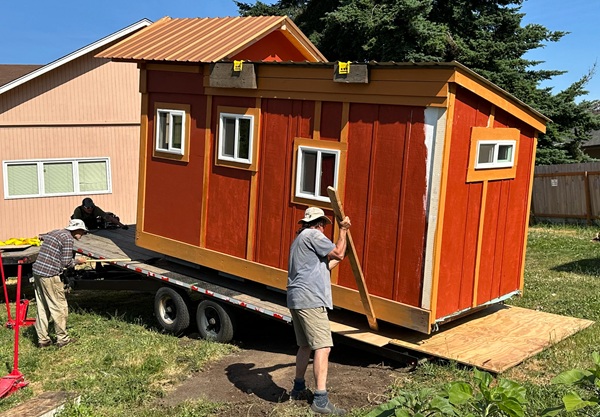
News presenter The KEPW program Legalize Survival recently featured a new transitional housing program in Santa Clara. Here is program host Jana Thrift:
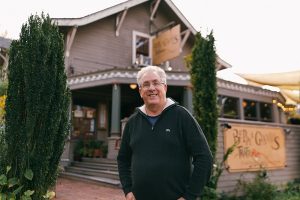
Jana Thrift Today we are lucky to have three guests here from the Community Garden Cottage program right here in Santa Clara of Eugene, Oregon. I’m going to introduce Matt (Irvin) first. He’s the program supervisor and part of the program since its inception. Neal (McDermott) is their case manager, and Terri (Reed) is a friend and neighbor who volunteers with the Community Garden Cottages. So I’m going to invite Matt to just tell us a little bit about what inspired the Garden Cottages program.
Matt Irvin In 2022 at Saint Matthew’s Episcopal Church, we got a new priest that came in, and she saw the lack of services in the North Eugene Santa Clara neighborhood for homeless persons or houseless persons. So we got together and started brainstorming what we could do to help people get into permanent housing.
We started with a small group, brainstormed. Actually, were able to acquire a $60,000 grant from PakTech with the stipulation that it was transitional housing. So we actually got together, got two tiny homes or tiny cottages because it fits within the Eugene camping ordinance.
So we initially started with the two cottages, got the infrastructure up. We have a outdoor kitchen, we have a shower, we have restroom facilities and basically got it all started from the ground up and got our first residents in in 2023. That’s it all in a nutshell.
Jana Thrift That’s awesome. And so tell us more about the program itself. Who do you serve?
Matt Irvin We debated how we were going to get people into the system, and we’ve partnered with Community Supported Shelters, the Safe Sleep Sites. We work with them looking for people that are ready for their next step into transitional housing.
So we supply our residents with two years free rent. They don’t have to worry about rent. They don’t have to worry about utilities. They have a free place to stay so they can go ahead and try to build up their funds to get the first last month’s rent and the deposit so they can get into more stable and permanent housing.
And we do that with the help of a caseworker, who is Neal, who you mentioned before, we felt was really important to have a real good, strong caseworker support, helping people with services, with help, finding jobs, education, everything that we thought we could get to help people get into a lot more stable position than they are coming out of the shelters.
Jana Thrift This model is amazing to me. Just saying, because one of the things I think is really lacking when you try to house people that have been on the streets for a long time, is that element of support. And so I really appreciate that. That is really built into this program.
And I definitely want listeners to know that Community Garden Cottages is in need of donations. If you want to support this program, you can go to the website which is StMatthewsCottages.org. That’s StMatthewsCottages.org. Call 541-689-4010 or email Penny Campbell at jetpenny@gmail.com.
And so this seems like a fabulous program. My understanding is they have residents that are transitioning out this year and then there’ll be new people coming next year. And so supporting this program will really make a difference for the next group of people coming into this program. So I think it’s important to mention that right away.
What came to my mind when I heard two years is that’s that’s kind of about how long it takes to even get into a permanent housing situation, a lot of the time. I want to invite somebody to tell me more about the two year idea.
Terri Reed Actually, we talked about it as a group. Essentially, the initial grant was for transitional housing, so it can’t be a forever home. And that was one of the things that I think we wrestled with as a team, talking about what makes sense for people who have been a little bit in survival mode and how do they reset their nervous systems, how much time do they need to do that while building towards more stability and independence? And so we decided upon two years and we thought it was a good amount of time for people to do that.
Jana Thrift So it just seemed like a really good number to get people really firmly into a foundational space that they can really have a solid ground to move from.
Terri Reed You know, it’s a really good point, Jana, because the residents that we have right now, they are so excited when they become residents. And if you look at the facilities, you know, this is not luxury at all. But they’re so thankful to have just four walls and safe space, community and support. And I think that’s what we’re going for.
About 15 years ago now, 14-15 years ago, my family went through kind of a scary situation. We did lose our house to foreclosure and we were in a really transitional time. I had teenage pre-teen boys, and it’s a really scary time for a mom. And out of the kindness, the goodness and the generosity of people that I was associated with, my own community at this time of year, one family bought us a Christmas tree, which we wouldn’t have been able to afford ourselves.
And I’ve never forgotten the kindness of multiple people reaching out to us in our time of need. And it matters to me. I remember how it felt to be supported and be in community, and so that’s important.
Right now, I can share the transition between a year ago where some of our residents were a year ago, compared to where they are right now, to actually being ready to launch one launching this weekend. It feels really good. I think, to all of us, we’re very, very excited for her and she’s very excited too.
Jana Thrift That’s just so cool that it’s happening, like literally right now, this person is getting into housing. Neal?
Neal McDermott Yeah, I thought I would tell you a little bit about just what case management is. We want to help them get income, whether that’s some sort of payments that they’re eligible for government payments or get a job. So we do income and then we do housing.
So we do a lot of support, a lot of brainstorming. I’ll track down leads for them. But we also do just general well-being, whether it is physical or mental. So that covers a lot.
And also just to have somebody—like I have one client who she calls me whenever she has good news and I’m just, like, so happy. I’m over the moon. I mean, we’re all over the moon that both of the people who are slated to leave at the end of February are in good shape. We don’t have to worry about them. And so we can just kind of enjoy the process, you know.
Like, the woman that Terri’s talking about, we’re going to go to a place that will provide her with some basics for her new apartment. You know, maybe a table, some chairs, bedding, things like that. And I’m just like, this is so awesome because my last act is going to be a shopping trip with her, you know? So we’re really excited about it.
Jana Thrift I love this model.
Matt Irvin I’d like to step in and say something about Neal. Neal has really been able to reach out and really identify with our clients, our residents. I really prefer calling residents instead of guests because they’re living at the church. They’re part of our property, and they are people that live there. They have grown so much in the past year that he’s been working with them, that it’s just really amazing.
Terri Reed It’s so nice to have a cheerleader and a case manager who is so positive and so encouraging and patient. Two steps forward and steps back, as we all have.
Jana Thrift Yeah. Meeting people where they are is just, it’s a talent.
Neal McDermott I want to say one thing that I really appreciate. Matt and I live in the same low income housing co-op, and he invited me to be a part of this group. And what really impressed me is that the way in which his church, Saint Matt’s, they reach out to the whole community.
I mean, they have, like, a community garden they host and somebody else runs it, and they’re always reaching out to say, how can we do this together? For most of our time there, we had more of our team members were not church members than were actually church members. It’s starting to even out now.
So I really feel lucky that Matt talked me into this. It’s just great. It just feels to me, like, reach out and get the ideas and the input of the local community. So I think that part of the model is really exciting to me because it’s so different.
Jana Thrift The faith community in Eugene is amazing. That is my experience. I just love that. And so I feel like this program is unique in several different ways, but maybe you could elaborate a little bit.
Terri Reed Because this model is so unique and the costs are relatively low, you’d be really shocked, I think, what the cottage program spends per month to house three people. And not only that, that Saint Matt’s kind of opens their doors, opens their arms to the community. They have a food pantry, a labyrinth, a community garden.
Like Neal was saying, it’s a really special place. We are fortunate as Santa Clara community members to have Saint Matthew’s Episcopal Church just in the community, because they are a lifeline to so many.
So the fact that this program is very low cost, we have some very, very frugal and creative team members, and so we’re able to do this really inexpensively. So it would be so great to see other churches, other organizations do the same.
Neal McDermott I wanted to add to that too, what you were saying about faith communities. I find that across the board in Eugene, people want to help, but they don’t know how, and this is just something that you can do.
We’re also lucky to be partnered with Community Supported Shelters. They will pick clients who do not have long term chronic homelessness. so we do not have the same challenges you might get. And, you know, I mean, everybody knows all the challenges of chronic homelessness. We’re given just about what we can handle, and we’re working it out as we go along.
I think it would be so great, I mean, anybody could do this, and I know people want to help directly, but they don’t want to take on the entire responsibility of starting something new. They might not be happy just giving money to a non-profit.
But seriously, I mean, if we can do it, anybody can do it. And time. It’s not a lot of time either at all.
Jana Thrift How would somebody, if they wanted to connect to get help, how would they do that?
Matt Irvin We do work just through Community Supported Shelters. They basically are how we vet people coming in. And right now we’ve just been serving women. We may have a mix of men and women in the future. But we were told by one of the people at Community Supported Shelters there was a real need for women in this situation. So that’s why we decided to go with having women as our first residents.
We’re helping three people, that’s three people that are being helped. And if every church that could afford to do it—and, you know, we’ve done all this through donations and grants, if you model this, there are so many churches in Eugene and Springfield and the surrounding area that if everybody took in two, three, four and under the camping ordinance in Eugene, you can have up to six to be there. If more churches stepped up and did this, we could have a lot more supportive housing for people that need it.
Jana Thrift I love that. So I guess I want to just put the shout-out again for Saint Matthew’s Episcopal Church, and that they have new residents that will be coming next year. So they’re looking to collect some donations, and people can do that by going to the website StMatthewsCottages.org or call 541-689-4010, or email Penny Campbell at JetPenny@gmail.com.
Terri Reed I wanted to give a shout-out to the residents and neighbours that we have, because they are equally as much our community as we are to them, and that’s pretty special. It’s been a pretty special process.
Matt Irvin We’re always glad to have people come and help us, and it’s just a really good experience. Like Terri says, you know, we’re working with new members of the Santa Clara community that are living at Saint Matthew’s. They’ve been really welcomed into the community. And it’s good for them and it’s good for us.
We’ll be glad to talk with anybody that would be interested in doing the same thing that we are. All they’d have to do is call a number and leave a message, and I will be glad to return their phone call and talk to them about it.
Neal McDermott I want to add to that the team members that aren’t here. They work really hard. And we have a new member coming in. And so yeah, it’s just, it’s great. People can help a lot just with what they’re already good at. I feel like that’s that’s really important because people do want to help and they bring a lot of skills and we can always use them. I feel really blessed to be part of it. And I have all these new friends.
Jana Thrift That’s absolutely fabulous.
News presenter Jana Thrift from the KEPW program Legalize Survival talks with Matt, Terri, and Neal about the Community Garden Cottages program in Santa Clara. For more, call 541-689-4010 or email JetPenny@gmail.com. You can listen to Legalize Survival at 7 p.m. Wednesdays on KEPW 97.3, Eugene’s PeaceWorks Community Radio.