UO builds its brand by highlighting 4 signature research areas
8 min read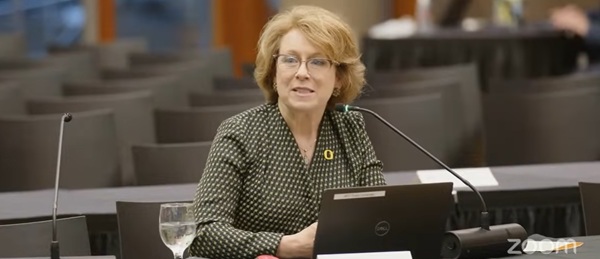
Presenter The UO will celebrate its 150th anniversary in 2026 as a member of the Big Ten and with a strategic plan called Oregon Rising that shines a spotlight on four areas of scholarship. Dec. 9, the Board of Trustees heard how the UO is supporting that strategic plan by sharing its stories with the world. Vice President for University Communications and Chief Marketing Officer Carol Keese:
Carol Keese (UO) There was some frustration that the U of O was not better known for the things for which it wanted to be known, including areas of scholarship in which we truly led.
The University lacked (and really had never built) the modern infrastructure needed to change perception and elevate reputation. We simply hadn’t done it. We did not have a team that was engaged in what I’m calling proactive media engagement, that is, cultivation of journalists and the media for positive news stories: How are we talking about our research? How are we getting the media engaged and interested in covering what’s happening at the University of Oregon, particularly in areas of scholarship?
We also lacked some basic infrastructure: things like the systems and tracking devices that we use and the software that we use to measure our performance for things like press releases and media coverage.
And then speaking of measurement, we didn’t have a good standardized way of measuring when we were being effective, what that looked like, what does success look like?
We were very fortunate in being able to leverage the investment made by the UO Foundation in Salesforce Marketing Cloud. It’s not just an email send platform. It can give you very detailed and sophisticated audience insights, which we are looking forward to being able to use.
So what do we create with all this? I’m going to walk you through some new content products that we are proud of.
The first of which I hope you receive and recognize called Oregon News. It is a weekly institutional news and content, the best of the best of what’s happening at the University of Oregon. It launched in September of ’24, timed with the launch of Oregon Rising as part of the way that we talk about the successes and aspirations and goals and progress made toward Oregon Rising.
It reaches at this point almost a quarter million people: faculty, staff, students, parents, alumni, legislative audiences, businesses and industry, and some general Oregonians who are interested. That’s about a 600% increase in distribution.
We also launched a podcast, This Is Oregon Podcast. We do twelve episodes during the academic year to highlight Goal 4 signature areas. That, of course, would be youth and behavioral health, environmental resilience, human performance and sport and accelerating impact.
We also really invest in developing relationships with individual reporters who are covering a particular topic, that we can pick up the phone and say, ‘Hey, we know that you cover —. We happen to have a forum coming up where we have some of our experts on that, would you be interested in attending?’ That kind of thing.
And then promoting research, we also are doing something new, which is taking our research findings and knowledge and expertise and applying them to current trends in news—sort of a newsjacking approach. So when, for instance, we had the LA fires a while back, we were able to put a number of UO experts into national news publications to be expert voices, to provide context and insight on the backdrop to fires and wildfires.
We created a new experts portal. This is on our Oregon News site and this is a searchable database essentially of for media inquiries, where you can look up if you’re looking for an expert on wildfires, you can actually do that, if you’re looking for a specific faculty person or you’re not sure who has the expertise in an area.
This is really designed for journalists. Making journalists’ jobs easier is the best way to at least optimize our chances of getting positive coverage, especially now when newsrooms have been cut back so severely. So this was a pretty important redesign of an existing asset.
We now also have dedicated media pitching staff to help handle incoming inquiries and navigate to the best expert on faculty. We also use on occasion an an external firm to help garner national reach. Again, mostly for our Goal 4 areas. And this is important because we don’t have—I will use the word Rolodex for those who remember—we don’t have the kind of really deep national contacts, very niche areas.
We don’t know who necessarily at Bloomberg is covering a particular angle, although we’re now getting up to speed and developing that network really quickly.
So I mentioned newsjacking, right. We were able to secure placements, quotes from our University of Oregon faculty as expert voices in stories ranging from the tsunami warning in Chile to the LA fires, to our wildfire season, to the future of mass timber.
Same thing on youth and behavioral mental health. Obviously, Kate McLaughlin and our rock stars in the Ballmer Institute. We again look at cycles like the school year to have opportunities to talk about youth mental health over the summer, back to school, the effects of technology on children’s well-being, as well as what the Ballmer Institute is doing in terms of legislation, similar legislation in Nevada that would open up this career pathway in the same way that the Ballmer Institute is looking to do here.
The Breaking4 attempt, we were able to to get great coverage on that. We’ve just had fantastic coverage on The Weather Channel, on Christopher Minsin’s work for how to train safely in cold weather and very cold weather. Best performance in women’s wear and others. So you’ve got the Athletic New York, New York Times, Outside, The Weather Channel and so forth.
We’ve also created a new format that has a lot of promise that’s been very successful so far, which is media forums. This is a Zoom panel of UO experts on a particular topic, again, focusing particularly on our Goal 4 areas with invited journalists.
So this is where we put three or four or five UO experts together for an hour on Zoom to discuss a topic and be available to press who really are dedicated to that topic to answer questions, have Q&A, and have discussion among the panelists. We’ve done six of these so far.
We have doubled the number of direct pitches in the last year, reaching 928 reporters and earning 55 national placements.
We respond to inquiries from journalists all the time who are looking for information or experts, being here, a 180% increase in those requests from 114 to 320. This reflects the increasingly successful degree of engagement and responsiveness that our team has had, cultivating, again, and being responsive to journalists.
It’s also, I think, an important lagging indicator of how media are increasingly seeing us as responsive and reputable and providing excellent value and excellent content for them.
And yes, we still do the good old-fashioned press release. They’re especially good when we’re talking about science-based information, so that you can get a lot into a press release that then provides opportunity for follow-up. We did 49 of those in FY25, resulting in 708 placements.
We love this. We want to see the University of Oregon represented out there as expert voices, but it’s also an increasingly important, I’d say, essential tool in driving generative search.
Earned media essentially is positive press coverage, expert commentary, thought leadership, and so forth.
So AI is now looking—because AI is looking for credibility—AI is looking to earned media as an important indicator of your sort of ownership of an area of content. So the more we do in our media, actually, the more we’re going to be found for, again, the research and the scholarship that we want to be known for.
Presenter One board member commented on the many hours of national attention drawn to the athletic program. Carol Keese:
Carol Keese We get enormous value from our national visibility, and I know that our friends in Admission have also, you know, very focused on: How do we leverage the visibility that comes with an outstanding world-class athletics division to bring students, faculty, attention, and halo to this organization? And how do we get the media paying attention to us in ways that are beyond athletics?
I think what we saw with the Big Ten and that initial year of what we were able to do with the Big Ten and even with Grateful Ducks this fall, got a lot—(Such a great campaign)(Thank you)—got a lot of eyeballs, in younger demographics, in prospective students. Reactivating our younger alumni (That’s right) was important when we think about the campaign coming up, that’s going to be really important.
One of the things that the U of O can do, not just because we’re a Big Ten big player, but because we’re the kind of institution that we are, we can play in kind of relevant, culturally-relevant spaces with a great deal of credibility and fluidity in ways that no, Dartmouth couldn’t. (No offense to Dartmouth.) Or Penn couldn’t. Exactly. So we’re known as innovators. We’re known as sort of not doing it the way everybody else does. We’ve known for chrome helmets. We’re known for, like, not caring a lot about tradition, but being (a) forward-thinking, playful brand. And that plays extremely well to younger demographics.
Presenter University of Oregon professor and city planning expert Gerard Sandoval:
Gerard Sandoval So I have this conflict where—I’ll give you an example. I was quoted on Newsweek about whether Los Angeles should host the Olympics or not. And so I had this conflict whether, should I, based on my expertise and my ability to provide my academic freedom, should I say what I really think? Or should I think about the UO kind of brand, you know?
Carol Keese We always encourage faculty to reach out to us. We’re happy to staff an inquiry. We’re happy to staff an interview. And so even though we provide training, we also encourage faculty: If you get an inquiry, if you’re reached out by somebody and it’s not us, call us. Because we can sort of help walk through some of the decisions around that, or give advice around whether this is an outlet that you should even feel comfortable talking to.
Presenter With the University preparing to celebrate its 150th anniversary in 2026, Carol Keese says her team is quickly ramping up to share UO stories with the world.