EWEB board considers urging ‘No’ on watershed measure
6 min read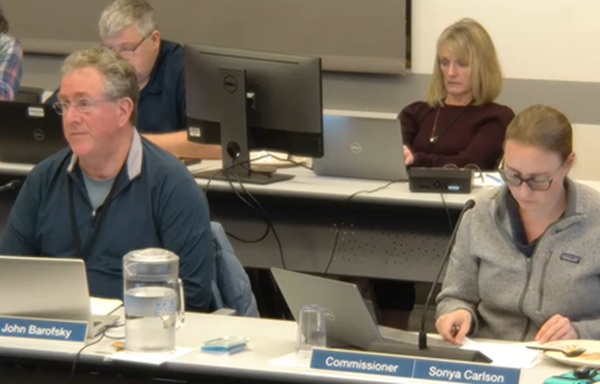
Presenter EWEB commissioners indicated that they will oppose the Watershed Bill of Rights, which will appear on the May ballot throughout Lane County. Speaking Jan. 6, Commissioner John Barofsky:
John Barofsky (EWEB Board of Commissioners) This is an issue that has made the ballot.
So it’s, again, it’s a little bit of a complicated thing with being a public body. We as commissioners can make a stand for or against or neutral, on this particular ballot measure. Staff cannot weigh in or or give us advice, is what I guess is what it boils down to.
We did receive a memo (which we asked for last month) as to what the implications of this ballot measure, if it passed, could be on the organization.
With that and some other research that I’ve been doing, with partners throughout the community, with partners involved in the watershed—like I said, I’m on the watershed council, so I have spoken with members of that council to get there. They haven’t weighed in yet. They probably will at their meeting coming this month or next.
But for me, this seems like as an organization and as a commissioner who’s been an ardent supporter of clean water in our community and EWEB was founded on bringing clean water to Eugene—that’s what it was founded by. It was the Eugene Water Board because there was so much illness happening in the city of Eugene from bad water, that I think it’s clear that our mission and our goal is to protect the watershed and make sure that our community has clean and healthy water.
I don’t believe—this is my personal belief—I don’t believe that this ballot measure would advance this utility’s mission. I think it would impede a lot of the things that we are trying to do to maintain and protect our watershed and our clean drinking water.
So with that said, I have crafted a resolution that I would like to have some input from the rest of the commission. And the direction that I think I would like to go with it is: Look at it, read it, see if there’s things that you agree disagree, and then if it’s a direction that seems correct, we could from what I understand, we could take this resolution, have it vetted not by staff, but by the board’s counsel to bring it back to us for a resolution next month to adopt.
So with that, I sent this out earlier today, and I also gave printed copies to everybody here. It goes through some of the poignant sections that I have personally found that might impact this entity—EWEB, not the community as a whole, just our body. And that’s where I’m at. So I would love to have other discussion on it.
Presenter Commissioner Sonya Carlson:
Sonya Carlson (EWEB Board of Commissioners) I completely agree. I appreciate you bringing this to us.
The only thing is that I loved the intro that you just gave and talking about our history and the ardent support and all of the work that we have done in the watershed, and maybe a little bit more of that could beef up the beginning part, so it’s really clear that it’s not that we are just committed to in the future, but we have a long history of operating and caring for the watershed, and we want to be able to continue doing that.
And this may actually become a hindrance to us continuing to perform that.
So if there was just a little bit stronger language such that you, you know, had demonstrated in your lovely speech. Thank you again.
John Barofsky (EWEB Board of Commissioners) I didn’t want to editorialize too much. That’s why I kept it short and sweet. But I think that’s an easy—there’s a whole book that I can pull a couple quotes out of: The History of EWEB on the McKenzie is the book, and if you haven’t read it, you should read it. It’s fascinating. So I will do that.
Presenter Commissioner Tim Morris:
Tim Morris (EWEB Board of Commissioners). I had an opportunity to talk with members in our community and also certified smart people about this particular measure.
The intent of it is very clear and one that I support—of holding polluters accountable and giving that power to the community to be able to do that work.
And then also, the way that this measure was written is extremely broad and can be challenging, especially for a public utility like EWEB. And so I agree with Commissioner Carlson that being able to add that language in of what EWEB is able and capable to do and how this measure would affect that, I think would be extremely important.
And like I said, the intent is something that I strongly understand and agree with, but I think that this could use a little bit more work in the community side.
Presenter Commissioner John Brown:
John Brown (EWEB Board of Commissioners) I’m been fully supportive of opposing this the way it’s written. It’s too broad. Because this could stop Finn Rock Reach and it could stop Quartz Creek. And they can sue and they tie it up for years and this thing would be just a litigious forever. And I think it needs—
You know, I’m probably the strongest proponent to protect the waterways. I’ve been going after governmental agencies that are allowing illegal camping on their land for decades. And, you know, so I’m very strong on trying to protect it.
But not with this, not with a shotgun. It has to be precise. So I’m in support of your effort, and I’ll support it in any way I can.
Presenter Commissioner John Barofsky:
John Barofsky (EWEB Board of Commissioners) It’ll come back to us next month as a discussion item and so if you see other things in here that you think you might want to change next month, highlight them, and we can do it in public session.
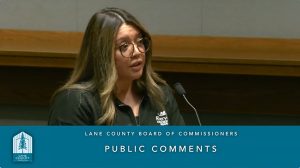
Presenter During public comment, Mark Robinowitz shared his thoughts on the ballot measure and other regional proposals:
Mark Robinowitz I saw on your schedule you’re going to have a discussion on the ‘Watershed Bill of Rights’ initiative.
A word about the Clean Water Act signed by Richard Nixon: It didn’t accomplish as much as was intended with the West Eugene Parkway, down the street from here, when that was proposed. The Clean Water Act did not prevent construction. It merely required disclosure of the planned damage. What actually stopped it was a very different law called 4F, which prohibits building federal aid highways on parklands, not wetlands.
Unfortunately, the initiative doesn’t specify who would enforce anything. It doesn’t have any legal processes specified in it, so it’s unlikely to impact EWEB operations.
But we need to do a lot more for pollution prevention since we are in the sixth great mass extinction of life, as we all know, but prefer not to think about too much.
Something that will impact EWEB operations and the Western power grid and society in whole is data centers and peak electricity, and the decline of natural gas, which has become the backbone for the Western Electric Coordinating Council, which we also don’t want to talk about. (And I have some charts on this I’d like to leave.)
There’s even proposals for new nuclear reactors at the Hanford Reservation, the most polluted place on this side of the planet and along the Columbia River, and if those are successful, then probably everywhere.
There’s even proposals I read about a couple days ago for thermonuclear fusion reactors for the Northwest, even though nobody has ever generated a milliwatt from fusion power. Fusion would create new nuclear waste through high energy neutron bombardment of everything else, including the structural supports.
And if you think global warming is not happening fast enough, then 100 million degrees C plasma all over the place—we could really accelerate climate change and the melting of ice caps and snowpacks.
I realize we live in insane times, but the idea that we’re going to boost fusion reactors all over the Northwest to power giant data centers to make AI fake videos is just—the only response is psychiatric.
So it would be nice in the new year to think about limits to growth on a finite planet, because Earth is not getting any bigger.
Presenter EWEB commissioners indicate they will urge a ‘No’ vote on the Lane County Watershed Bill of Rights, on the ballot in May.