Marty Wilde on the transportation bill: What Democrats got wrong, what Republicans got right
6 min read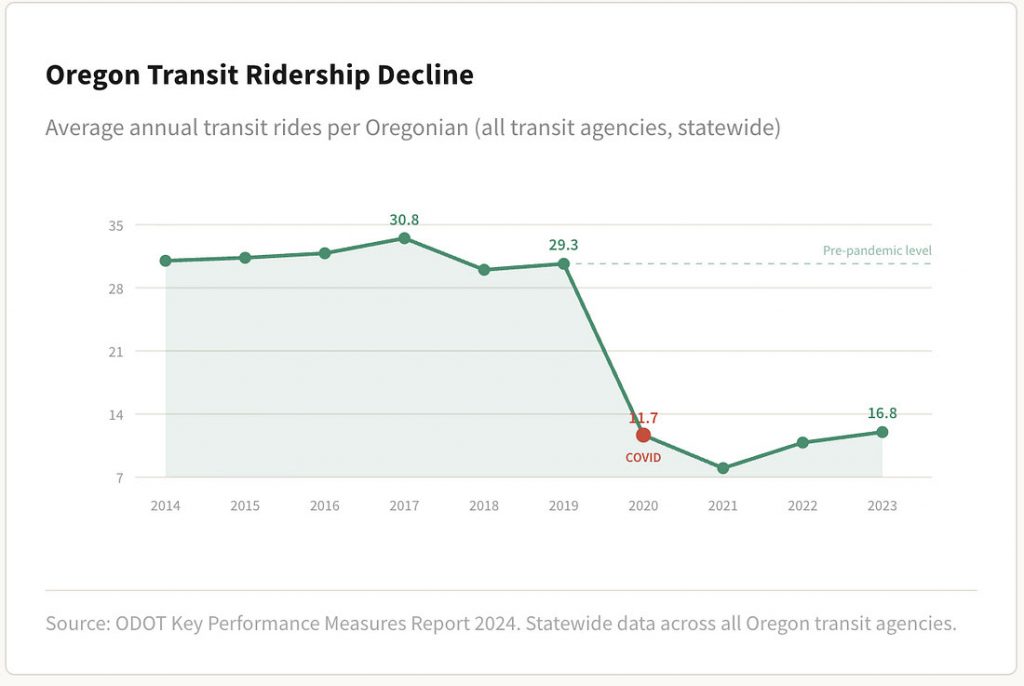
|
Getting your Trinity Audio player ready...
|
by Marty Wilde
ODOT has a budget problem. Depending on whom you ask, the culprit is either declining gas tax revenue, reckless megaproject spending, or a legislature too gridlocked to make hard choices. The real answer involves all three, which neither party has been entirely honest with voters about. Here’s the short version of what happened:
- Democrats passed a $4.3 billion transportation bill in a chaotic special session last September.
- Gov. Kotek deliberately ran out the clock before signing it, limiting the time for a referendum.
- Republicans gathered 250,000 signatures anyway—more than triple the 78,000 required—and the tax increases are now frozen.
- In January, Gov. Kotek pivoted to calling for repeal of her own bill.
- Democrats are now trying to move the referendum to the May primary, where lower turnout favors them.
We have to ask: Why is an agency whose budget grew 60% in a decade still unable to plow its roads?
The budget paradox
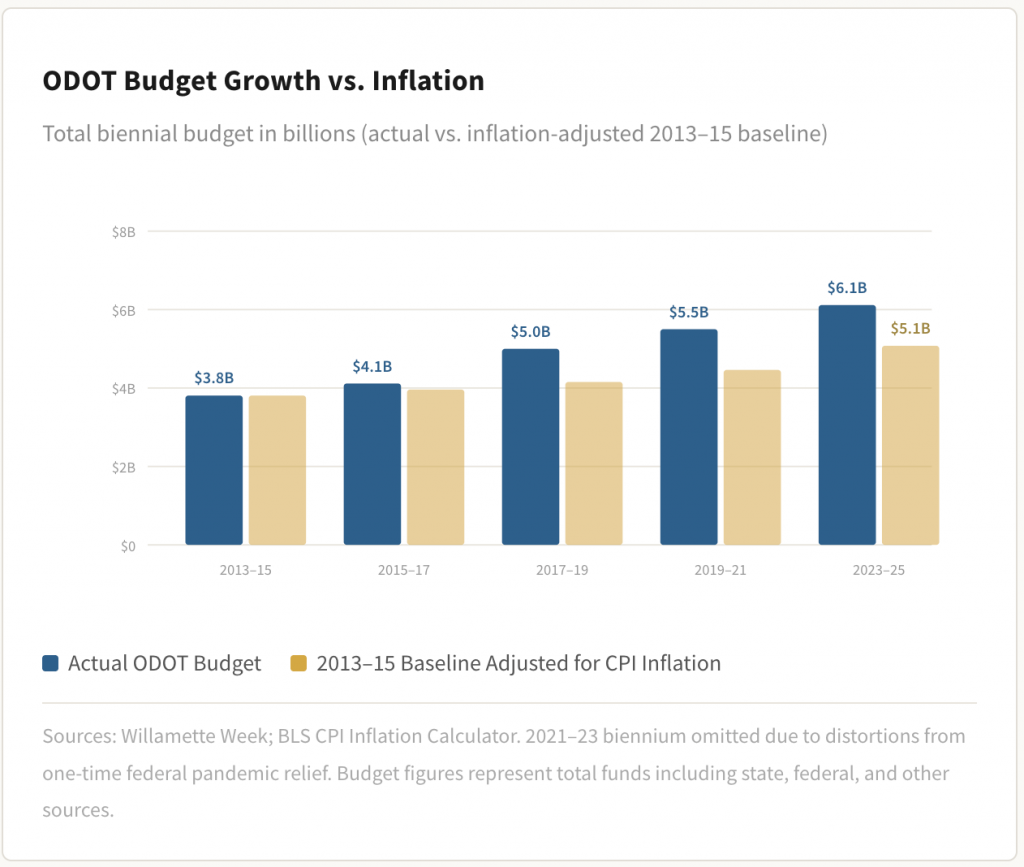
ODOT’s total budget grew from about $3.8 billion in the 2013–15 biennium to $6.1 billion in 2023–25—a roughly 60% increase. Cumulative inflation over the same period was about 33%.
So where did the money go? The 2017 transportation package (HB 2017) raised nearly $1 billion in new taxes and fees over two years. But only about $23 million of that went to maintenance. The rest was locked into:
- Mandatory allocations to cities and counties (50% of state highway fund revenue)
- The I-5 Rose Quarter expansion and Abernethy Bridge project
- Safe Routes to School and other statutory programs
- Debt service on bonds.
Meanwhile, ODOT’s operations and maintenance budget has been underwater since 2019. The agency took progressively larger voluntary cuts—$47 million in 2019–21, $78 million in 2021–23, and $171 million in 2023–25—achieved mainly by holding positions vacant, deferring fleet purchases, and reducing maintenance stockpiles. By 2025, the agency faced a $354 million deficit and warned of laying off 483 employees.
The cost overrun problem
ODOT’s real financial problem isn’t declining revenue—it’s megaproject cost overruns.
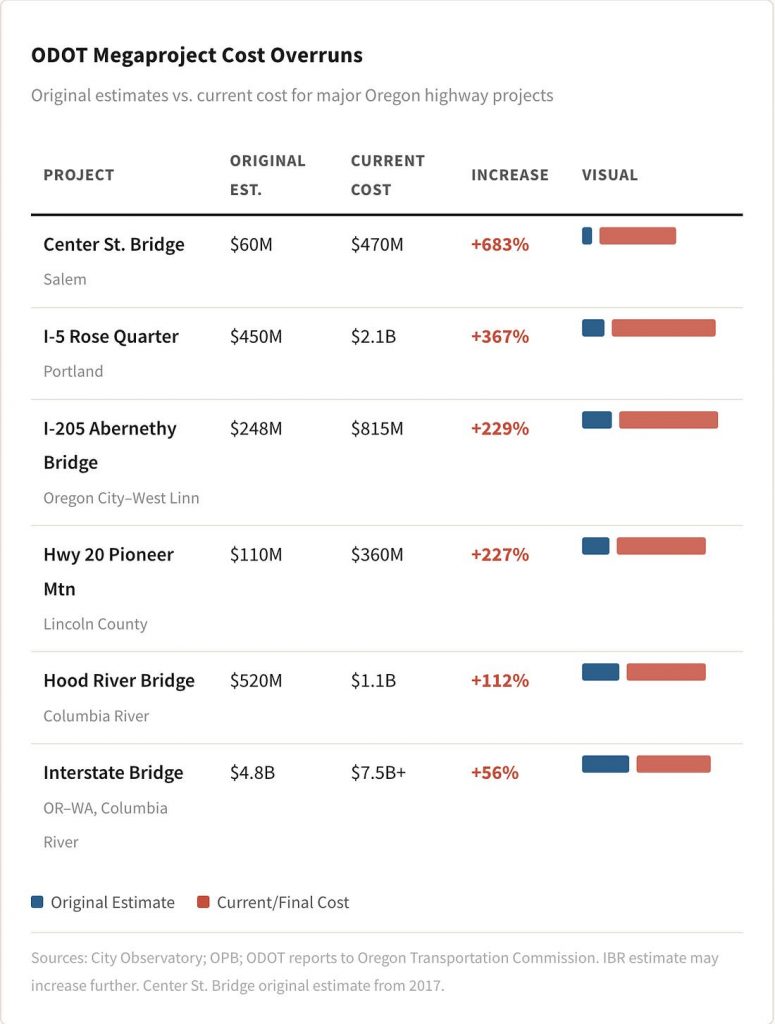
Just three Portland-area megaprojects—the Interstate Bridge, the Rose Quarter, and the Abernethy Bridge—have seen cost overruns totaling roughly $4.8 billion in the past five years.
ODOT recently shifted $100 million in bridge maintenance funds just to cover overruns on the Abernethy Bridge—money that could have gone to the maintenance and operations the agency says it can’t afford. The agency has consistently prioritized starting megaprojects over finishing them, then used the resulting deficits to justify requests for more revenue.
The transit dilemma
The Republican proposal to redirect transit funds to road maintenance sounds simple. But transit is already in serious trouble because of declining ridership.
TriMet, the state’s largest transit agency has suffered a decline of roughly a third from pre-pandemic levels, with the recovery stalling. The agency’s subsidy per ride has soared from $1.77 in 2014 to $7.88 last year. Its cost per service hour jumped 53% from 2019 to 2024. TriMet is now warning it may need to cut up to 34 of its 78 bus lines in 2027.
These numbers suggest that some reduction in transit funding is necessary. The statewide payroll tax created in 2017—about $300 million per biennium—was designed for a world where ridership was trending upward. That world no longer exists. Remote work has permanently altered commuting patterns.
But let’s be honest about why this conversation is so hard for Democrats. Transit funding reductions face powerful opposition from two of the party’s most important constituencies, public employee unions that represent ODOT and transit workers and environmental groups not ready to give up on transit as a way to reduce carbon emissions.
These are real interests, not frivolous ones. Transit serves low-income Oregonians who have no other option. Climate goals matter. But a transit system that costs nearly $8 in public subsidy per ride, serves a third fewer people than it did a decade ago, and is warning of 65% service cuts regardless, clearly needs structural reform. Democrats need to make that case to their allies rather than pretending the status quo is sustainable.
EV drivers will overpay
One part of the bill that survived the referendum—and that both parties broadly support—is a mandatory road usage charge for electric vehicles. The concept is sound: as EVs replace gas-powered cars, they use the roads without contributing to the gas tax that funds maintenance.
But the details matter. Under HB 3991, EV drivers must either:
- Pay 2.3 cents per mile through the OReGO program, or
- Pay a flat annual fee of $340
The question is whether those amounts are equivalent to what a gas-powered car pays—or whether EV drivers are being asked to pay more.
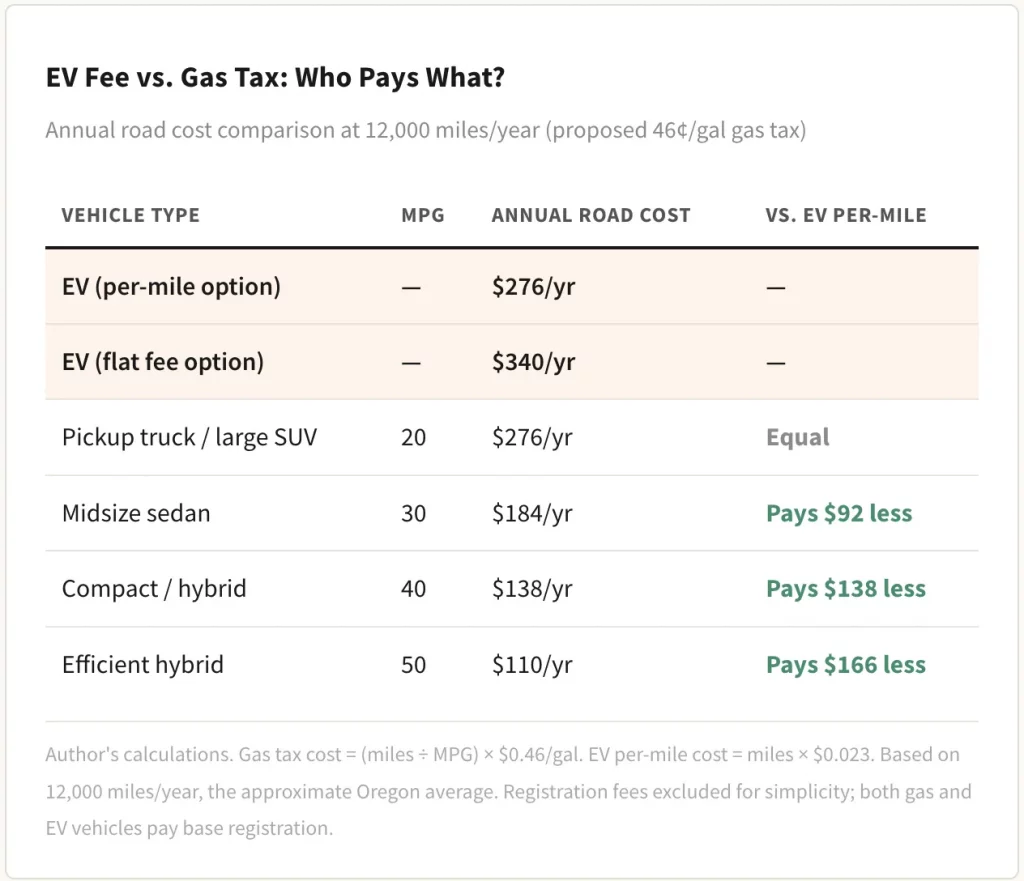
The math is clear: The 2.3-cent-per-mile rate is calibrated to a 20 MPG vehicle—the fuel economy of a full-size pickup truck. An EV driver paying the per-mile rate contributes exactly as much as someone driving a gas-guzzling F-150. They pay significantly more than the owner of a 30 MPG sedan, nearly double what a 40 MPG hybrid pays, and if they opt for the $340 flat fee, they pay more than any gas vehicle that gets better than about 16 MPG.
The principle—everyone who uses the roads should help pay for them—is correct. It’s the rate that’s wrong.
What Republicans got right
Republicans are correct that ODOT has a spending problem, not just a revenue problem. Their alternative, House Bill 3982, proposed:
- Redirecting roughly $500 million in existing funds from pedestrian/bike safety programs, EV charging infrastructure, the Climate Protection Program, and passenger rail to road maintenance
- A 3% across-the-board ODOT budget cut (~$40 million)
- Pulling funding from hundreds of vacant positions
- Moving $36 million from the Connect Oregon program to road operations
The proposal had real weaknesses—it generated no new revenue and would have gutted important programs. But Republicans were right to insist on accountability before writing a bigger check.
What Democrats got wrong
Democrats hold supermajorities in both chambers. They could have passed a transportation bill at any time during the regular session. Instead, they:
- Didn’t unveil a bill until the final weeks of session
- Couldn’t hold their own caucus together
- Forced a special session that cost taxpayers $270,000
- Needed a Republican crossover vote to pass it by the bare minimum (36–12)
- Then watched the governor delay signing to hamper the referendum—a tactic that even two Democratic senators publicly criticized.
More fundamentally, asking taxpayers for $4.3 billion while ODOT’s megaprojects were hemorrhaging money was always going to be a tough sell. The bill included accountability measures, but didn’t address the structural problem of an agency that systematically underestimates project costs and then uses the resulting deficits to justify more revenue.
Where we go from here
The referendum succeeded. The tax increases are frozen. ODOT faces a $242 million budget gap. Gov. Kotek now favors a “redirect, repeal, and rebuild” approach—essentially the framework Republicans proposed all along, though she won’t say so. Meanwhile, the megaprojects lumber on, spiraling ever upward in cost.
The path forward requires honesty from both parties:
- Democrats need to acknowledge that ODOT has a management problem that more money alone won’t fix. They need to have hard conversations with union allies and environmental groups about right-sizing transit funding to match actual ridership, not aspirational ridership.
- Republicans need to acknowledge that you can’t maintain a 21st-century transportation system on a 20th-century funding model forever. Gas tax revenue will continue to decline. At some point, new revenue is necessary.
- Both parties need to stop treating megaproject cost overruns as someone else’s problem. No new transportation bill should move forward without structural reforms.
Oregon needs a transportation bill built on a foundation of real accountability, including structural changes that tie project funding to realistic cost estimates and hold the agency accountable when those estimates are wrong.
Until that happens, voters are right to be skeptical. The 250,000 signatures on the referendum petition aren’t just an expression of anti-tax sentiment. They’re a vote of no confidence in the way Oregon manages its transportation dollars. Both parties should take that seriously.
Marty Wilde represented central Lane and Linn counties in the Oregon legislature. For more of his Letters From a Recovering Politician, subscribe at https://martywilde.substack.com/subscribe.