PIELC 2026: The joy in the fight
9 min read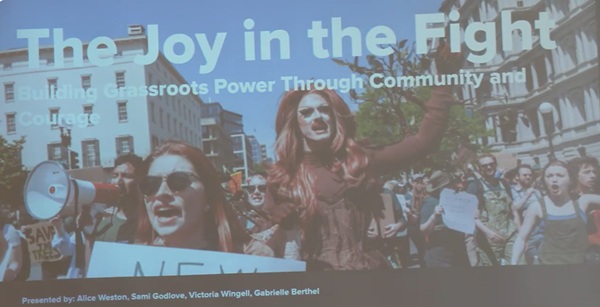
Presenter: The 2026 Public Interest Environmental Law Conference got underway and John Duran was there. From Oregon Wild, Victoria Wingell:
Victoria Wingell (Oregon Wild): I just want to make sure everyone is in the right room. Are you all here to see ‘The Joy In The Fight?’ (cheers) This is the vibe we want to bring, so thank you for that.
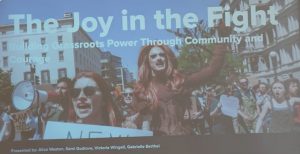
Okay, so welcome to our panel. As I mentioned, it’s called, ‘The Joy in the Fight: Building Grassroots Power Through Community and Courage.’ It should come as no surprise to anyone here that we are in a moment that demands both courage and creativity if we are going to get through this together.
And so this panel is going to explore how we can use joyful resistance and community-building as a really strategic way of building momentum and keeping groups together and being able to sustain the momentum that we’re building. And so this is really guided by lessons in joy and courage and real-world accountability campaigns.
So what we want to talk about today is that joy is not only fun. Like, yes, of course we all want to have fun in the work that we’re doing, but it’s also a really necessary thing to include in our work.
This moment is pulling people’s attention in a lot of different directions and everyone’s emotions are going up and down, and sometimes that can be really challenging.
And so what we want to talk about today is how we can harness joy and use that to keep people together, keep people showing up, and also empowering people to step deeper into action.
And we’ll all share something that brings us joy in this work, so:
Attending PIELC panel: Envisioning a new way of being and making small spaces that mirror the world we want to build and practice it.
Gabrielle Berthel (NRDC): I love that. Practicing the world you want to see.
Attending PIELC panel: Being fully human.
Gabrielle Berthel (NRDC): Humanity. Joy in humanity. (Yep. Yeah.)
Attending PIELC panel: For me, joy is really rooted in community. I find that when joy is shared, it’s so much more powerful.
Gabrielle Berthel (NRDC): I love that.
Attending PIELC panel: Not being on a Zoom call. (laughter)
Gabrielle Berthel (NRDC): Joy in being in person, joy in stepping away from the keyboard. I love that one.
Attending PIELC panel: Singing in a group,
Gabrielle Berthel (NRDC): Singing. I love that.
Attending PIELC panel: Being in nature.
Gabrielle Berthel (NRDC): Being in nature. This is what brings us all together.
Victoria Wingell (Oregon Wild): So my name is Victoria Wingell. I’m the grassroots campaign coordinator with Oregon Wild. One thing that brings me joy in organizing is really the community-building aspect. I love seeing the power of people in action.
Sami Godlove (Oregon Wild): I’m Sami Godlove. I’m also with Oregon Wild. I’m the Central Oregon field coordinator. Something that brings me joy, I think, is getting outside with a lot of our community and our activists in the beautiful places that we work to protect.
Gabrielle Berthel (NRDC): And I’m Gabrielle Berthel, and I’m a forest advocate with Natural Resources Defense Council. And something that brings me joy in this work is just being able to see that there are other people who also care about the things I care about.
Alice Weston (Sierra Club Oregon): Alice Weston, she/ her. I am an organizer with the Oregon chapter of the Sierra Club based in Bend. And something that brings me joy in this work is working with youth. That’s always like pretty inspiring, gets me excited.
So I’m going to talk a little bit about the history of joy in the movement. As long as there have been people resisting oppression, joy has been used as a tool for building support, sustaining efforts, and just plain surviving. Joy is a tool for imagining a new future, inspiring change, and is essential to movement-building work.
The history of joy in resistance is a huge topic, so we’re going to kind of give a few examples, but we had a hard time narrowing it down because there are so many great examples.
This quote, I think some people have seen probably around, but this is around, about during the AIDS epidemic. This quote is during the darkest days of the AIDS crisis:
‘We buried our friends in the morning, we protested in the afternoon and we danced at night all night. And it was the dance that kept us in the fight because it was the dance we were fighting for.’
And I think this is pretty incredible quote, because it’s also talking about the heaviness of the work, but then also the joy and the celebrating and the community-gathering aspect.
So I kind of want you guys to think about, like: What is it that you’re fighting for? What is it that you love? And that’s why you’re fighting and remembering that aspect of it. So this quote:
‘If joy wasn’t so dangerous, the people in charge wouldn’t be spending so much time and effort to deny your ability to access it.’
And: ‘Dreaming allows us to envision a better world than the one that we are currently being offered.’
So I think that’s a big piece of it too, is that the joy allows you to really fight back and to envision, collectively, a better future.
Gabrielle Berthel (NRDC): Persistence. This is something that I come back to all the time. The only people who benefit from us quitting are the people who want to see us fail. Like, you just have to keep going.
And aspirational. Sometimes joy is hard. Sometimes joy is really hard to find, and it’s really hard to accept or to sit in. So you can aspire to be joyful. It can be the end goal, right?
So this is a quote that I really like: the sharing of joy, whether physical, emotional, psychic, or intellectual forms a bridge between the shares, which can be the basis of understanding much of what is not-shared between them and lessens the threat of their difference.
So in a really fraught time for this country and our world, it’s nice to think about the things that bring us joy and the bridges we can build across our issues.
Victoria Wingell (Oregon Wild): So next, we’re all going to share some examples of some really fun campaigns that we’ve worked on, and we want to focus on how joy was a really critical strategy in all of that organizing.
So yes, while we had a really good time with all of this, it was also a really important piece that I don’t think you can leave out, especially in these really difficult, challenging times. And that’s because it creates a space to bring people together into the work. It makes it more approachable for people, but it also helps us sustain ourselves and our communities while we’re often doing what can be difficult and stressful work.
So while we’re sharing these examples, I want to invite you all to think about how you can implement joy in your own work as well. And remember, all of these tactics can be scaled up or down depending on what tools you have to work with.
Sami Godlove (Oregon Wild): Cool.
Alice Weston (Sierra Club Oregon): Hi again. Alice Weston, she/her. I’m an organizer with the Oregon chapter of the Sierra Club, and I’m based in Bend and work in Eastern and Central Oregon.
I’m going to talk about a little bit about how do we think about and practice joy in our work. So one thing I want you to think about is, in your work as a volunteer, as a professional, as a community member, where can you, where do you have power to change things, to create things and to implement joy in your work?
So I think we all have different, we have power different ways. And we often don’t think about that. We don’t pause to think about where we can make choices. And I think it’s really important that we really take the time to think about that and where can you actually implement? Where can you have, where do you have opportunities?
And I do a lot of community work event creation, and so there’s lots of opportunities for creating joy and connection and creating spaces for community joy.
But I think making that important is really, is something that we can do and we can give each other permission to do that. When we were putting this stuff together, there was a lot of conversation about people not feeling permission to feel joy.
And so I think it’s really important for us to set examples for ourselves, for our friends, our family members, our community, and our coworkers to give people permission to feel joy, to express joy, to share joy in this work.
While it is really difficult and we’re in a difficult time, it’s also incredibly, it’s important. It’s how we get through things.
And then also I’m a big believer of saying ‘Yes’ to the silly things. I think a few of us showed up at the 1.25% for Wildlife Lobby Day and someone asked us if we would wear these animal masks.
And so I found myself in Salem wearing an animal mask. And I think that it brought so many people joy—all the kids were there to talk to their representatives about the bill and they were just like thrilled to see the animals also lobbying.
So I just feel like saying ‘Yes’ to that stuff also inspires other people and gives them permission to see themselves doing things joyfully.
Gabrielle Berthel (NRDC): Hi, my name’s Gabrielle Berthel, and I’m a forest advocate with the Natural Resources Defense Council. I would challenge you to show up like there is joy to be found in showing up, pushing yourself to grow a little bit outside your comfort zone.
And I mean, even when we were planning this session, we repeatedly came back to, like, how challenging it can be to find joy in this moment. It’s bleak out there, but sharing that burden with other people, other like-minded people, even if it’s not like perfectly in your wheelhouse can really, I think, buoy you through these harder times.
So I have really come to value showing up, working in partnerships with local and community groups. The opportunity to gather joyfully can be limited depending on your organization’s structure, depending on where you are in the country, depending on a lot of things.
And I think it’s just really awesome that when you do have that rare opportunity to participate in a rally or in a hearing or in a demonstration, it’s an opportunity to celebrate the work that happened behind the keyboard for those months and months of isolation.
And it’s like a rare moment to not only win the win but win the work. Like, you’re celebrating the work as you’re doing it. So I just think that if you have an opportunity to show up in partnerships, support your colleagues, support your coalition partners, it’s super worth it.
And I found it really rewarding. But it can look really different, right, depending on your organization, depending on the levels of government that you interface with. Depending on your goals and priorities, the fight can be very different, but at the end of the day, I think we’ve got some common goals. We want the public to know what’s going on with their environment.
If it’s public lands, if it’s the pipes that bring the water to your home, whatever the issue is, we want the public to know what’s going on. We want to make information accessible and engaging to the public. A lot of times that is through really cool events where you’re tabling and you’re talking to people one-on-one, or it can be through a social media campaign.
Or it could be through an influencer campaign. We want to elevate the voices and perspectives of our stakeholders. These are the people who are just impacted. If something impacts you, you should have a say. You should have a say in the democratic process. That could be writing comments, that could be, you know, attending a lobby day.
But we want to make sure that the people who are most impacted have a voice. And I think we really have to stay rooted in balancing the serious with the scary, while also, you know, maintaining the seriousness of the issues. It’s okay to be funny and uplifting and glib, but also, like, underpinning that this is a serious issue, and these are absolutely vital to do the work on.
Presenter: Field recordings by John Duran for KEPW News. You can see this entire panel from the 2026 Public Interest Environmental Law Conference on Todd Boyle’s YouTube channel.