Meet the candidate: Dr. Melissa Bird for Congress
9 min read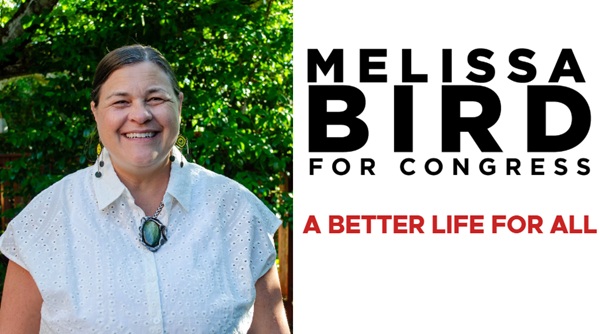
Presenter: This is Meet the Candidate on KEPW News, with Dr. Melissa Bird. Welcome, Dr. Bird. Please tell us about yourself and why you’re running for Congress.
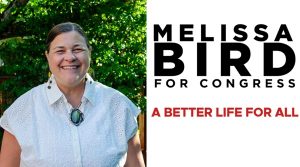
Dr. Melissa Bird: Hi everyone. I’m Dr. Melissa Bird, I am a descendant of the Shivwits Band of Southern Paiutes and I live in Corvallis, Oregon. I am a working mom. I have three kids and I’m married to a disabled veteran and I am a social worker.
I have a master’s degree and a Ph.D. in social work. And I have always taught policy advocacy, social justice and community change. So I am what we call in the profession a ‘macro social worker.’
So I’ve always worked on policy and advocacy for my community throughout my career, and I am running for Congress because I believe that at this point in our nation’s history, we need more working folks in Congress who know what it’s like to raise a family in this economy; who are deeply involved in our community; and we need new and fresh voices in Congress who have an understanding of what it’s like to be directly impacted by the decisions that Congress is making.
Presenter: What’s the most important issue facing Oregon’s 4th Congressional District in this election? How would you address it?
Dr. Melissa Bird: As I have traveled throughout the district, people are deeply concerned about housing and housing prices. They’re deeply concerned about health care and access to health care.
And as I have talked now to tens of thousands of people throughout this district, and as the campaign has talked with people throughout the district, one of the things that is really becoming abundantly clear for the people here in Congressional District 4 is that what works for Eugene and Corvallis is not a solution for what works on the coast or in some of the rural areas of our district.
And what I am realizing since we launched this campaign on July 1 is that we have a need for a multipronged strategy from the federal level to not just exact blanket policies for housing or health care, but to really be thinking about how we are looking at our rural areas as opportunities for economic growth and development, how we are listening to the needs of the people.
A lot of people in Congressional District 4 don’t feel heard and they don’t feel seen, especially outside of the Eugene area. And I think that’s natural for the largest city in the district to be getting a lot of attention. But the infrastructure issues and the issues that we are facing throughout the district where, whether it’s about our agriculture, our forestry, or our tourist economy, all of those things are really deeply impacting people’s day-to-day lives.
And I think that particularly when it comes to health care, this need for universal health care, universal child care, things that I think are really important to the health and welfare of our communities, they get distilled into these political taglines that don’t actually address the needs of the people.
And so as I am moving forward in the hopes of becoming the congresswoman here representing Congressional District 4, one of the things that I bring to the table is this framework of looking to communities for answers.
So not necessarily coming in as a leader and saying, ‘Well, I have the answer to your problem,’ but really focusing on the issues of the people and how we can get resources from the federal government down to the actual community level.
There’s a deep concern about ICE on the coast, particularly as the coast is under the threat of having an ICE facility built, a detention facility built on the coast.
Folks are deeply concerned about that not happening, because what is going on here is impacting the tourist economy here in Oregon, and there is grave concern all up and down the coast that it’s not just going to impact the folks who work and live in our communities, but also what it will do to people coming and visiting our beautiful state. That is a grave concern for folks.
Another thing that I’m hearing—and I have traveled from the border of California all the way up the coast, all the way up to the top of Lincoln County. The district is huge. It’s that huge coastal area, and then half of Douglas, all of Benton and all of Lane.
So it’s a big district and you know, people are really concerned about our forest and opening up our BLM land to old-growth logging and clearcutting is of grave concern to people because of how it’s going to impact our water. Our watersheds are so critical.
And, there’s a lot of pushback about what’s happening with the administration and also a lot of concern about the lack of attention being given to folks when they do reach out to our congressional delegation and how they don’t feel heard and seen by our current representatives.
And so, the reason people are saying that they are voting for me is because of my focus on being in community. I’m not a professional politician. I’m an activist and a social worker, and so I think that approaching people where they’re at, not where I want them to be, is a critical component to who I am as a human being, and I do think it’s what sets me apart from other people who are running in this race.
Presenter: If elected, what would you do differently than your opponents?
Dr. Melissa Bird: One of the other things that’s been reflected back to me from people who are coming and listening to me talk, whether it’s at our house parties or our meet and greets or even—
You know, I’m a born protestor. I have attended a lot of protests, even before I was running for Congress, but particularly so I can connect with people and find out why are they protesting, what are they protesting and what does it mean to them to have representation at the federal level that’s listening to them.
And one of the things that gets reflected back to me often is that if I don’t know the answer to a question, I don’t make something up and parrot some political talking point. I say to people, you know, ‘Nobody’s ever brought this issue to me before.’ You know: ‘Let me look into it. Tell me more. Let’s go to coffee. Let’s talk about this.’
And even as a sitting congresswoman, I still think there are opportunities to engage in those kinds of things when I’m not in Washington.
I keep reminding people that the House of Representatives is the House of the people. It was structured that way. The reason they are two-year terms is not so that people can run over and over again for 30 or 40 years.
The House of Representatives is set up to represent the voice of the people, and that means we need a diversity of voices for the people. And one of the things that I really love about running for Congress is connecting with the people and no matter their age, no matter their background, really hearing from people about what is critically important to them is critically important to me.
And I think that if we can look at this race as an opportunity to look at who is going to represent the people and be the voice of the people, by the people and for the actual people—not professional politicians, not people who have been pulled up by the parties, all the parties, as the chosen people.
But really, I’m a working mom, married to a disabled veteran, trying to figure out how to pay my utility bills, like, as the rents rise not just throughout the district, but here in Corvallis. Our rent has gone through the roof here in Corvallis.
And, you know, people are living in their cars not because they’re not working three jobs, but because the cost of living does not compare to our wages anymore.
And we need people in Congress who have a clear understanding of what it is like to be on Medicaid. Our family has been on Medicaid. We have been on food stamps before, and that’s not through any failing of me or my husband. The structure of the way we work this system is not set up for people like me and my husband.
He and I talk about this often. And I want to be represented by someone who is willing to listen and who may not have all the answers, but is willing to try and figure out who we need to work with to find those answers.
I’ve been like that my entire career. When I started out working as an advocate in child welfare, we had people who were working with abused kids who were in foster care, they would need resources.
I had one person say, these kids are going to be pulled from their foster home—it’s a family of five siblings have managed to stay together, which is rare in child welfare—because they don’t have good carpet. They need new carpet, but they can’t afford it. And I was like, ‘Well, let’s just get it donated.’ You know? So we figured out how to get carpet and pad donated from companies.
It’s the same thing at the federal level. If I don’t have the answer or I don’t know how to get the answer, there are ways for us to figure out how to work with others to help this community thrive.
Presenter: Is there anything else you’d like to add? Running for Oregon’s 4th Congressional District, Dr. Melissa Bird:
Dr. Melissa Bird: The best way to start is to go to our website MelissaBirdForCongress.com. (That’s F-O-R congress.com.)
You can follow us on all the social media platforms. That’s really also important because I become more visible the more followers we have. We all know how the algorithm works, right? But we’re also posting really fun and amazing content that’s really inspiring and helps people really become more clear about how I see the issues.
We do have an issues page in our website, and I will be very honest. I’ve had people come to me and say, ‘You don’t have enough information about this. I want more. Here are my thoughts and ideas about agriculture. Here are my thoughts and ideas about the Middle East. Here are my thoughts and ideas about health care.’
And we incorporate those into the issues page when people bring them to our attention. And so this really is a people-power campaign. And we are always in need of volunteers. We are canvassing, we are phone banking, we have lawn signs, we need help distributing those things.
And we have an events page on the website. I am live on Zoom every Wednesday at 7 p.m. for an hour to answer anybody’s questions. Anybody can come on and talk to me. I’m always up for coffee or a meet-and-greet or a house party and I’m always up for walking with people too.
So people have found out that I am happy to go door-to-door and canvass in a neighborhood and people are shocked. Like, honestly, like it’s the weirdest thing ever. They’re like, ‘You’re the candidate.’ And I’m like, ‘Do candidates not show up anymore?’ Like, ‘I might be old school, but I thought candidates walked door-to-door to get votes from people.’
So, we’re having a great time and volunteering for the campaign is a really important way. This is a grassroots campaign that’s being funded $10 at a time, which is really remarkable and amazing. If all 900 people who are following me on Instagram would donate $10, we’d be looking good. If they donated $20, it’d be even better, right?
And so I’m not asking people to donate thousands of dollars to the campaign (although sometimes, you know, the maxouts are nice), but what I’m really asking people to do is invest in this because I’m not doing this for me, I’m doing this for our community. And that means I want our community as involved as they can be in every aspect of how they can be.
Presenter: Dr. Melissa Bird is running in the May 19 Democratic Party primary. You can learn more about the candidate, and how to donate and get involved in the campaign, at MelissaBirdForCongress.com.