MPC prioritizes road dividers on 2-lane stretch of Beltway
9 min read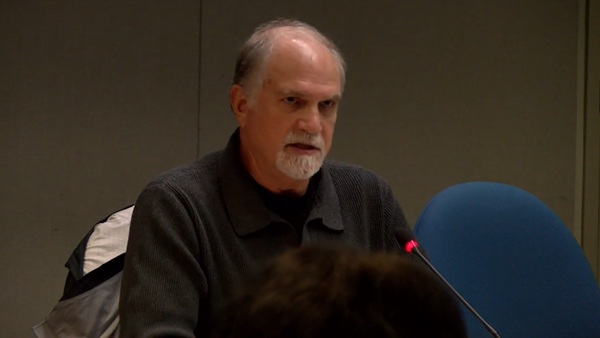
Presenter: Eugene City Councilor Randy Groves looks for a cost-effective transportation fix—before there’s another head-on collision on the Beltline. At the Metropolitan Policy Committee April 2, Metropolitan Planning Organization Program Manager Paul Thompson:
Paul Thompson (LCOG, MPO program manager): If you recall, two months ago at the February meeting, you had ODOT staff here to present on the development of ODOT’s new capital investment plan. Instead of taking a three- to four-year look through their STIP (Statewide Transportation Improvement Program) process every other year, they’re now looking at developing a 10-year plan.
Part of that process involves reaching out to the Area Commissions on Transportation (ACT, the Lane ACT in our case, and asking for input. As you heard two months ago, the ACT can identify the top three to five priorities, prioritize those, and then identify up to 10 more projects.
The top five priorities would include the first priority for the MPO, under the recommendation: The Oregon 126B Mill Street to 21st Street project in Springfield. It includes three other projects from other ACT members: one in Veneta, one basically from the Lane County jurisdiction, OR 126 East, and one on OR 126 West. And then it includes a project in Oakridge for crosswalks.
Those are being proposed by ODOT staff as the top ACT priorities.
Presenter: He noted that Lane County projects will compete against other Oregon projects. Paul Thompson:
Paul Thompson (LCOG, MPO program manager): There is no pot of money to Lane County. There is no guarantee we’d even get one of these projects funded. They’re really going to be looking at those top five more closely in line or in comparison in the same bucket as projects from throughout the entire state.
So in sticking with the OTC’s (Oregon Transportation Comission) goals, with their (project scoring) weights they have given to safety, for instance, we think that it’s important that we stick to those as much as possible because that’s the lens they’re going to be applying statewide. And that’s how we’re going to compete is statewide.
Presenter: Eugene City Councilor Randy Groves:
Councilor Randy Groves: Two points I’d like to make, especially in consideration that this plan is now looking at a 10-year window instead of a couple of years, I think it makes this even more relevant.
The first is an issue that I bring up frequently, and that’s the seismic upgrade of our overpasses, our bridges, and having a secure route of travel, not only to get people to the hospital and evacuate an area, but also to get emergency equipment in.
I was speaking with Eugene staff yesterday and we talked about this and there to get on ground streets around some of the potential failure points that get on either 105 or Beltline that can still get us to the hospital.
My point is, having been an emergency responder for almost 37 years, I know that the public rarely responds to emergencies, they react. And they don’t always react well under the pressure of a catastrophic condition. Anything we can do to simplify these routes of travel into straight lines helps the outcome of an event.
Also, the straighter the line, the easier it is to get emergency equipment in, so we need to be doing a two-way in-and-out in order for the system to work.
I just would like to see something that highlights that as an issue. And I know (ODOT Area 5 Manager) Vidal Francis is familiar with me bringing this up, and actually was gracious enough to set up a meeting for the two of us with the lead engineer for the state for ODOT. I do appreciate that. So that’s one issue.
The second issue: I’m disappointed to see that the section of Randy Papé Beltline from Roosevelt to West 11th Avenue has fallen off the list. And the reason I’m concerned about that is it’s a single section of Beltline that has single lanes in each direction with a thin dividing line between them.
Keep in mind, vehicles are traveling 50-55 miles an hour and up, so a head-on collision where vehicles are passing within inches of each other, we’re talking 100 to 110 miles an hour closure speed. Those are not survivable accidents.
And so was really hoping we’d see, even if we didn’t get extra lanes in each direction, at least a divider barrier with Jersey barriers or something that would at least reduce the odds of conflict between two opposing vehicles traveling at highway speeds.
So again, I just want to go on the record on those two issues. I think they’re both important. I’m not saying they’re more important than some of the other things, but it should be nice in the next 10 years that we had a plan, wrapped around taking those into consideration.
And on the seismic issue, you know, how does a journey of a thousand miles begin? With one step. And if we start making progress towards that goal of having safe, easy to follow reasonable transportation points with some assurance that they’re going to maintain there from a seismic standpoint, I think that’s important.
And the next point I want to make on that is I know you’re putting a lot of effort around Highway 58, because that’s how we’ll probably get a lot of our supplies into the area. That’s good. The problem is. They can make it all the way to I-5, and if the Harbor Road overpass collapses, they aren’t getting any further north than that.
And so again, we have vulnerabilities that at least we need in the plan to be addressed. And I know Springfield’s got some of the same issues going on. I’m not as familiar with those, but I would be supportive of that as well. You know, if the materials and supplies for a large seismic event or any catastrophic emergency come in and we can’t get them to where they need to be deployed, they aren’t doing us much good.
Presenter: Transportation planning manager for the city of Eugene, Rob Inerfeld:
Rob Inerfeld: Rob Inerfeld, city of Eugene staff.
The Highway 99 project was more just like, we don’t have a project there. It’s more like, we know there’s safety issues there and we need, we ought to develop a project. So I think that’s further out.
Also, the city working with LTD are about to kick off a study where we’re going to be looking at all of Highway 99 in Eugene from like either Garfield or Roosevelt, all the way up to Awbrey Lane.
And we will be developing recommendations. So I think that could probably be on a slower track and we could take that one off , or put it at the bottom of the list if MPC members were amenable to that.
Presenter: MPO Program Manager Paul Thompson:
Paul Thompson (LCOG, MPO program manager): Councilor, you could today take action to say, ‘Hey’—and I’m really not proposing this, it’s up to you if you want to carry it forward—but you could take action today to say, ‘Hey, Beltline Roosevelt to West 11th is above Oregon 99 BeltLine (to Awbrey Lane).
Presenter: Councilor Randy Groves:
Councilor Randy Groves: Okay, I’ll give my best shot at this. I move that we replace the Beltline Road Roosevelt Boulevard to West 11th Avenue and we move that into the position of the Oregon Highway 99 Beltline to Awbrey Lane Safety Improvements Project. The main focus being the safety barriers, to at least put a physical barrier between the lanes.
I’ll also remind everyone that anyone living west of Eugene and Lane County has to travel that route. And that’s the most logical route to get to the hospitals is Beltline. And a two-lane road with a head-on collision—it’s shut down. There’s nothing getting through there.
I also had another piece and often we go back and look at data. I don’t have any data on this. I do know that one of our former mayors of the city of Eugene lost his son, a teenager, to a head-on collision on that section of roadway. And you don’t forget those things as a person, a father, or a responder. When you’re cutting people out of wrecks, especially when they’re deceased, that sticks with you.
And I just think that this probably isn’t a super high cost that would definitely make that stretch of road safer. Again, you’re separated by about this much space with 100 to 110 mph closure between the two vehicles traveling at highway speeds, and it’s something that’s very preventable.
The Roosevelt to West 11th section of BeltLine and the problems, I mean that that’s a heavy traffic area because there’s a lot of people come from west of Eugene and in West Eugene that use that section of roadway to get to other places in town— to get to the hospital, to get to Costco.
Presenter: Staff will estimate the lower costs for the scaled-down project. With a final word from the Oregon Department of Transportation, Area 5 Manager Vidal Francis.
Vidal Francis (ODOT, Area 5 manager): One thing I do want to also comment on too is: We have had a recent project, which is the Westbound Springfield Willamette River Bridge project that has been recently completed and we’ve been getting a lot of complaints on, let’s just say, the rideability of the surface of the bridge there, I think quite a few folks have kind of experienced a little, let’s just say, a not-so-smooth ride.
I will say that, we are bringing back our contractor to come look at this, but it’s going to take just a little bit of time to have them come out and do the repair, if you will.
We’ve estimated that it’s more of a, let’s just say, a workmanship defect that needs to be corrected. But the correction measure is something that’s going to be more involved than, you know, just go out there and put some patches on there and walk away.
We’ve got one of two choices, where we could either do a texturization over the entire surface to help. But in order to do that, you’ve got to do some infills in certain areas.
And then the other option would be to do what we call it an MPC (multipurpose protective coating) or, actually, a PPC (polyester polymer concrete) overlay, which is a methacrylate-type material that we just coat the entire thing with and that would help level all the surfaces across it.
But both of those processes will take time. And the contractor’s already aware. They’re on board with us and we’re talking with our engineers on which path to take, which one’s the best one.
And I anticipate (at least talking to my construction manager) that it’s probably more than likely going to happen more towards the summer, if you will.
So if you can please bear with us with the little hiccup right there, we really appreciate it. The fix is just a little bit more than just throwing some patch on there. We’ve got to do a little bit of design work just to make sure that it’s right.
So I just wanted to share that with this group just in case you’re getting a few more comments. And then you can tell your folks you reach out to me if they need to. I’m happy to share, walk with them and talk with what I know and understand as far as that project’s concerned. And that’s my update for the day.
Presenter: The state is working with the contractor on smoothing your ride, and Councilor Groves champions an important safety project, in hopes of saving lives on the Beltline.