EWEB signs new contract with BPA through 2044
4 min read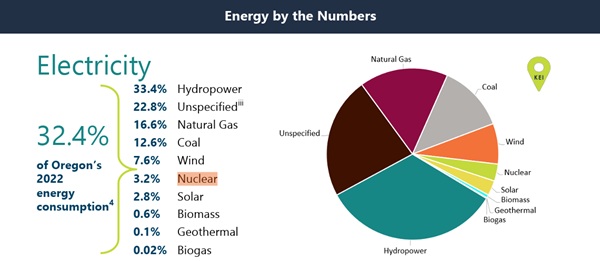
|
Getting your Trinity Audio player ready...
|
from Aaron Orlowski, Eugene Water & Electric Board and staff reports
EWEB has signed a new contract with the Bonneville Power Administration that runs through 2044, securing access to between $2.5 and $3 billion worth of energy.
“For many decades, BPA has been a dependable partner, and we are glad to continue that partnership for another two decades,” said EWEB Chief Energy Resources Officer Brian Booth.
BPA is a federal agency that sells energy from large dams on the Columbia and Snake Rivers, as well as the Pacific Northwest’s sole nuclear power plant, the Columbia Generating Station. Energy from BPA makes up about 80% of EWEB’s energy supply.
BPA’s energy mix is about 85% hydropower, a small amount of nuclear energy, and other sources. EWEB doesn’t get to pick and choose from among the different parts of BPA’s mix.
BPA’s hydropower system enables EWEB to maintain a power supply that is more than 90% carbon-free, yet still flexible enough to meet swings in customers’ energy demand.
“When cold weather hits, our customers’ electric heaters kick into overdrive, and so does the hydropower system as it works harder to keep homes warm and the lights on,” Booth said. “No other energy technology today can generate that kind of abundant, carbon-free energy exactly when we need it.”
For EWEB customers, the cost of procuring energy accounts for about 30% of their total electric and water bills. Other costs accounted for in the bill include: building and maintaining the poles and wires that deliver energy; building water storage reservoirs; providing customer support; and maintaining fleet vehicles.
Energy from BPA’s system is among the least expensive available. Federal law gives community-owned, nonprofit utilities in the Pacific Northwest, such as EWEB, priority access to BPA’s low-cost hydropower, which largely comes from dams that were built between the 1930s and 1970s. This hydropower enables EWEB to charge customers rates that are significantly lower than other utilities in the region.
In-depth analysis drove BPA contract choice
In 2023, EWEB worked through an integrated resource planning process to weigh the tradeoffs between different energy resources the utility could procure to meet customers’ energy needs. The process resulted in several action items to conduct additional study and had one especially firm conclusion: BPA hydropower was the best option to continue to form the foundation of EWEB’s energy resource portfolio.
But BPA, which has contracts with community-owned utilities across the Northwest, was concluding one contract period and launching negotiations for another. The new contracts need to be signed by the end of 2025 and will officially commence in 2028.
As part of the contract development process, BPA developed a suite of “products” from which community-owned utilities could choose. Those products outlined when and how much energy BPA would deliver to a utility and laid a framework for how prices would be calculated. The different products were meant to give utilities options so they could develop an energy portfolio that aligned best with their customers’ energy needs, their own staffing abilities, and their existing non-BPA resources.
EWEB needed to choose a product that aligned with its unique characteristics: the largest community-owned utility in Oregon with a highly involved customer base, several local energy suppliers, a major university, and a highly flexible mid-sized hydropower facility on the McKenzie River — the Carmen-Smith Hydroelectric Project.
EWEB staff conducted nearly two years of analysis and public engagement — including by launching a focus group of diverse community representatives called the “Community Table” — to parse out the differences between the products.
Ultimately, EWEB chose the BPA product “block with shaping” because it aligns with EWEB’s strengths.
“We are making a bet on our customers,” said EWEB Chief Energy Resources Officer Brian Booth. “The BPA product we chose gives us more flexibility to meet our customer’s energy needs, but it also gives us more responsibility. When we dug into the finances of the various products, we found if we dedicate ourselves to deep partnerships with our customers, we can keep costs lower than if we had chosen to go all-in on BPA.”
For more on the BPA energy mix, see the state’s 2024 Biennial Energy Report.
About the Eugene Water & Electric Board
The Eugene Water & Electric Board is Oregon’s largest customer-owned utility. Founded in 1911, EWEB provides water and electricity to approximately 96,000 customers in the Eugene-Springfield area. EWEB’s service area covers 236 square miles with a population of more than 200,000 people, including major institutions such as the University of Oregon.
A five-member elected Board of Commissioners governs the utility, which does not operate to earn a profit or to serve the investment needs of stockholders. Employing approximately 500 people, EWEB serves the people of Eugene by embodying core values of safety, reliability, affordability, environmental responsibility and community/culture.
EWEB owns four energy generation facilities, including hydroelectric projects on the McKenzie and Clackamas Rivers, and leads watershed protection measures with local landowners and environmental organizations.
With one of the greenest energy supplies in the nation, approximately 90% of EWEB’s power comes from carbon-free sources, and EWEB is committed to achieving a 95% carbon-free energy portfolio by 2030.