Opinion: This is not how a legitimate government behaves
4 min read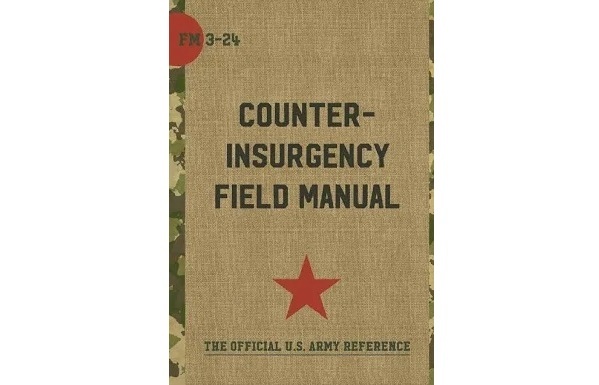
|
Getting your Trinity Audio player ready...
|
by Marty Wilde
When federal agents surged into Minneapolis in the wake of the fatal ICE shooting of Renée Good, state and local leaders called it a “federal invasion.” Minnesota and the Twin Cities sued to halt the surge, arguing that it was unconstitutional and harmful to public safety. The Justice Department suffered mass resignations as career federal prosecutors declined to investigate the victim’s widow, rather than investigating the officer who shot her. Immigration officers have responded to daily protests by using violence against protestors.
These actions are not the hallmarks of a government operating with the trust of its people. They are the hallmarks of a government acting against its people, a government that failed to learn the lessons of Vietnam and Afghanistan.
Legitimacy is everything
In Vietnam, the U.S. backed a South Vietnamese government that lacked popular legitimacy. Similarly, in Afghanistan, the U.S. propped up a Kabul administration widely seen as corrupt, predatory, and disconnected from ordinary Afghans. In both cases, American officials insisted that more troops, more raids, more intelligence, and more “precision operations” would turn the tide against the insurgents.
But the tide never turned, because counterinsurgency (COIN) rests on one bedrock principle—you cannot defeat an insurgency on behalf of a government that people do not support. Every COIN manual, from the U.S. Army’s FM 3‑24 to the British experience in Malaya, repeats the same lesson: legitimacy is the bedrock of stability. Without it, every use of force deepens the political crisis rather than resolving it.
Minneapolis is not Vietnam—but the logic is the same
Minneapolis is not a war zone, but the federal government’s posture in deploying agents over the objections of state and city leaders, refusing civil rights oversight, escalating enforcement after a disputed killing, and using violence against protestors mirrors the strategic blindness that doomed U.S. efforts abroad.
Consider the parallels:
- A government acting without local consent. In Vietnam and Afghanistan, Washington insisted it knew better than local leaders. In Minneapolis, the Department of Homeland Security surged agents despite unified opposition from Minnesota’s governor and the mayors of Minneapolis and St. Paul.
- Use of force that undermines legitimacy. The killing of Renee Good, disputed by local officials and followed by a refusal to investigate, eroded trust before the surge even began.
- Escalation framed as restoring order. In both foreign COIN campaigns, U.S. officials claimed that more force would stabilize the situation. In Minneapolis, DHS justified its surge as necessary to maintain law and order, despite local leaders warning it would inflame tensions.
- Communities treated as adversaries. Protesters across the country described the federal presence as aggressive and undemocratic, a perception that mirrors how Afghans and Vietnamese civilians viewed foreign troops.
The lesson is not that Minneapolis is Kandahar. The lesson is that the logic of state power is the same wherever legitimacy is absent.
Losing the American public
Insurgencies take root when the population concludes that the government is not acting in their interest. While Americans generally support immigration enforcement, as evidenced by innumerable polls and the results of the 2024 elections, they do not support it when it occurs in ways that prey on the people more than protect them. Once people see the federal government as acting against them, every federal action is interpreted through a lens of distrust. That is exactly what is happening in Minneapolis.
The immediate defense of the shooting as being justified flew directly in the face of the observable facts, undermining credibility. The decision to freeze out state and local investigators made it immediately clear that the federal government was not interested in a true accounting of the events. The resignations of the prosecutors tasked with reviewing it only confirmed this.
Finally, the increasingly violent actions of federal agents against peaceful protestors, many caught on camera, further reinforce resistance. This is not how a legitimate government behaves.
The U.S. government cannot police its way out of a legitimacy crisis
The U.S. spent two decades in Afghanistan trying to build a government that people would trust. It failed, not because American troops were incompetent, but because legitimacy cannot be manufactured at gunpoint. No matter how positive American forces were in their interactions with Afghans, we were seen as the representatives of a predatory government. We lacked the consent of the governed, from which all political legitimacy flows. During my deployment as a member of the NATO legal team, I saw first-hand how the predatory nature of the Karzai government undermined the team’s efforts to build a functional justice system.
The same principle applies at home. If the federal government wants cooperation, stability, and public safety, it must earn them. That means operating with transparency about their actions, accountability for wrongdoers in uniform, a cooperative relationship with state and local officials, and enforcement policies developed in cooperation with communities, not against them. Without these, every federal action will deepen the divide.
The United States has already lived through the consequences of ignoring legitimacy abroad. Minneapolis is a warning that the same mistake can be repeated at home. A government that does not earn the respect of the governed cannot maintain order. It can only enforce it—temporarily and at great cost. The question now is whether Washington will learn the lesson it failed to learn in Saigon and Kabul, that power without legitimacy breeds insurgency, not stability.
Marty Wilde represented central Lane and Linn counties in the Oregon legislature. For more of his Letters From a Recovering Politician, subscribe at https://martywilde.substack.com/subscribe.