Meet your new city manager: Jenny Haruyama
22 min read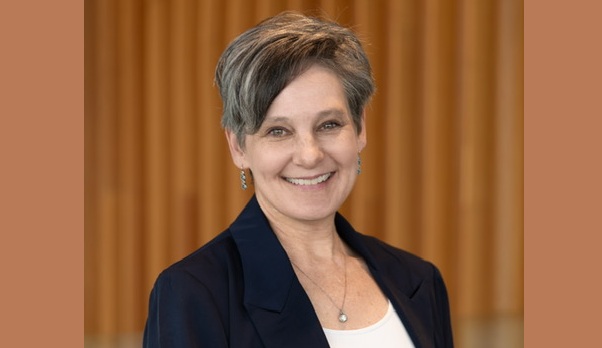
[Lightly edited for brevity and clarity]
Presenter: The Eugene City Council on Wednesday selected Jenny Haruyama as the next city manager. Here Jenny introduces herself, one day earlier, during her Jan. 13 job interview with the Eugene City Council. Councilor Greg Evans:
Councilor Greg Evans: Welcome, Jenny. Welcome to this interview session with our City Council and our mayor here. We are going to be asking questions in order of city council wards and start off with Ward 1 and Councilor Kashinsky.
Councilor Eliza Kashinsky: Thank you, it’s great to get this chance to talk with you about this role. Can you tell us about how you have built relationships with community partners and collaborating jurisdictions, and can you talk about which collaborations you’ve had that have been particularly constructive and ones that have been more challenging?
Jenny Haruyama: That’s a great question. My experience in terms of collaboration and building those partnerships ranges. In Beaverton, we actually have a unique situation because we have a number of special districts—we have a park district, we have multiple water districts, we also have a clean water district, and we also have a fire district.
And so some of those partnerships I probably want to give you an example of would be with the county. We actively work on implementing what’s called a supportive housing service fund. That was allocated through Metro.
It affects three different counties and so Multnomah, Clackamas, and Washington County. And so that pretty much funds all of the homeless shelter needs, and we’ve been building this infrastructure throughout the entire region. And so some of those conversations are around IGA development and that’s where the partnership comes in.
We had a shelter built in our community thanks to some of the dollars that we raised at the state and the federal level. No property tax was used, coming out of the city’s general fund. And so we had to be able to have a seat at the table, part of that RFP process in order to help select who was going to provide homeless services. And so that was a negotiation through the IGA (intergovernmental agreement) process as we determined what the terms would be.
And so working with our partners in that way so that we would have a seat; the other would be how the money is given and funded to the city; making sure that the county was working with the provider on good neighbor agreements so that when we were having issues or if we had issues with the neighborhood or with the businesses, that there were agreements that folks had entered into.
So that’s some of the collaboration between the county and I.
Another example I would give you which would also be more of an economic development-related partnership, would be with our parks district.
We are home to the training center for the Thorns and the Timbers. Beaverton is, as you know, is a sports-minded community. We have Nike, we have Columbia, so it’s really important that we want to keep these folks here.
And so working with the park district, they had an opportunity to sell their property in which the Thorns use. And so I worked with the general manager to be able to come up with term sheets and negotiation tactics to be able to get that over the goal line and ensure that the Thorns stayed here.
And again, these are opportunities that are really important with connection and making sure that the left hand knows what the right hand’s doing because if we were to lose that, that would be a huge loss to the city. And a blow to basically what our claim to fame is in Beaverton.
So those are some examples that I would give you. And when we don’t agree, we try to work those out mutually, let the electeds have their conversations and the administrators kind of stay out of that. And there’s been several instances where we’ve had to agree to disagree on funding strategies, but at the end we try to kind of focus on that shared purpose, which obviously is the community.
Presenter: Ward 2 Councilor Matt Keating:
Councilor Matt Keating: Jenny, nice to meet you. Thank you for being here. In an increasingly volatile political climate, how will you balance the desires of our community and council with a federal administration whose policies might be at odds or in direct conflict with the city of Eugene?
And are there examples of recent or relevant occurrences you can point to that might help Council better understand how you will navigate these challenges?
Jenny Haruyama: Yes, and I think having an aggressive and strong federal framework is really important, both at the state and the federal level. We’ve had a number of experiences in losing federal funding as a result of either language that we’ve used in contracts or on our website.
And so we’ve been creative in trying to navigate some of the verbiage that we use. But we’ve been pretty strategic when those things occur, and I’ll give you an example.
We had been working with an affordable housing bond through Metro to establish a deeply affordable senior housing project. That project lost funding from our federal delegate. We had an earmark of between $2 million and $3 million, and that was devastating to the project. If we did not have that money, that project would not get over the goal line.
In addition to that project, not only would it be housing, but it would be subsidized childcare on the bottom, and that was by design.
So what we did is we aggressively went (this was last legislative session) to our representatives and designed a strategy around getting a capital construction grant through.
And one of the things that’s really important, and I’ll probably again weave in economic development because I think that’s going to be a theme for the community, is that understanding what is important to your local representatives, particularly your governor, and the governor, on her kind of checkbox senior housing childcare.
We’re a childcare desert, so that’s super important to us. So we’ve been leveraging the need for quite a long time. So we had an opportunity to kind of activate that bottom space that way. But making sure that your agenda mirrors what perhaps the state is looking for is very important. And that’s what kind of put us in a great position to be able to secure that money.
We were not in a position to take from the general fund. We had to support and balance some of the core services like safety. And so we wanted to preserve that, but we weren’t going to let go of this project. And so we were very successful in getting the exact amount of money that we needed to be able to make sure that that project is done and it will be done this year.
So that’s one approach that I would recommend that the city consider when they’re developing their framework. And that’s going to take a lot of work with the council, with the mayor to be able to be very thoughtful when you’re putting forward your housing projects, your capital projects, to try to find that kind of common area.
Because what is important to them and is important to you, that’s when the lights start to light up. , And that’s really how we’re going to try to navigate through this.
The other is on your federal lobbyists. They are so critical ’cause they are boots on the ground, up at the federal level, and they can let you know what words to use, what grants are actively being not threatened. For us right now, it’s working on infrastructure, we see an opportunity there.
So I do think it’s going to take a lot of legislative partnerships, work with government relations, and this is where I think. This council, the mayor, can be very, very tactical and kind of reviving some of the ‘Oregon 7’ conversations around a shared legislative framework, because collectively you’re also going to be able to do more good, shake more trees. And so that, that would be kind of my two cents on that. I think it is a work in progress.
The other thing is, is that (a little bit of commentary) is: You don’t know what you’re going to get every day. The landscape is constantly changing, so that’s something where we’re going to have to be very fluid and be able to kind of pivot and roll with the punches. I don’t know what to expect over the next six months, let alone the next month, let alone the next week.
So again, this is going to take a lot of flexibility both on my part, your part, and the community’s part.
Presenter: Ward 3 Councilor Alan Zelenka:
Councilor Alan Zelenka: Two of the many important issues in Eugene are addressing climate change and addressing homelessness, and they’re both crying out for funding. And so in an environment where there’s limited funding, limited resources, and other many competing interests, how do you address funding for these important issues and making progress on them?
Jenny Haruyama: That’s a great question and really tough one because this kind of gets back to, I think, where the community conversation is going to need to be had on prioritization and developing kind of a collective prioritization.
We’re getting to a place where everything is important, but we’re not going to be able to do everything, but we can do some things. So for instance, on homelessness, working to prioritize what’s most important, and then focusing on those things, I think, is the conversation we’re going to have.
I’m going to kind of toggle a little bit and go back to the sustainability question.
Right now we’re in a position in Beaverton where we have a 5,000-unit development. This is our last large development. It’ll increase the population by 15,000 to 30,000, roughly, depending on what is built there.
We designed what’s called a Cooper Mountain Plan with our transportation system planning in mind, with our sustainability goals in mind, and that comes at a cost, and it comes at a cost to the developers. And so what is happening right now is we have been able to have wider cross-sections, larger sidewalks, street medians that have tree canopies, making sure that we have either shuttle or transit service, right? All of those things are needed to have a really good climate benefit.
But it comes at a cost. And so right now the challenge is developers coming in and saying, ‘That’s going to be too expensive.’
So how do we respond to that? We have to have some tradeoffs. Do we want the housing built? Yes, we do. Do we want the climate action benefits? Yes, we do. So we have to meet somewhere in the middle. There is no secret sauce or solution. It’s called compromise, and it’s called prioritization.
And it’s choosing, based on the community’s input, what they’re willing to pay for and what comes at the priority. And I think that that’s the hardest conversation that we’re going to have here, because we’re getting to the point where with Proposition 5 and Proposition 50, which constrain as you know, we’re not going to be in a position to have it all.
And so my job for you is going to help you develop that prioritization process with the community so that you can make these decisions and then we can move forward collectively together… in order to secure core services.
I also think that working with your business community, bringing them under the tent in decision-making is also important because when you do have those revenue conversations (and you are having them for the library levy, and you will have them for other things in the future), it’s important that we have our stakeholders listening, understanding, providing input so that they can proudly have a sign in their window saying, ‘Support measure X or Y,’ or whatever it is.
And so I do think part of the answer, kind of maybe looping back on both the sustainability and the homeless, is to make sure that your stakeholders are either fully bought in or that they have been informed and are informing our actions.
I think we saw a little bit of challenge with that, with the fire fee. And so, let’s learn from that as we’re moving forward, and we’re developing solutions, either, whether they’re revenue-based or whether they’re reductions that have to be made because we’re trying to salvage something that’s for the good of the community.
Presenter: Councilor Jennifer Yeh:
Councilor Jennifer Yeh: Yeah. Thank you. So glad you’re here. My question is, can you—oh my gosh, I lost my question (laughing). Can you tell us about your approach to using the triple bottom line or an equity lens in your work?
Jenny Haruyama: Oh, thank you. So I’ve had the opportunity in Beaverton to establish an equity office, hire a chief equity officer in management and also staff to be able to do just that.
A couple of examples is we have developed a what’s called a CIP (capital improvement project) prioritization lens in which, how we rank CIP projects to determining which projects, kind of, come first, second, and third.
A really great example is kind of our roadways and our paving. So looking at geographic location. The last time we’ve done some overlays. What the impact is of not doing the work, who lives in the area and the demographic, and kind of using that as a lens to inform.
It’s not a perfect science, but it really helped to provide some information as we’re developing kind of this broader budget prioritization lens that I was talking about earlier that’s needed.
The other is that we also, through this process, developed a downtown equity strategy. And that was really important because not only did that help us deal with displacement issues, both for residents and for businesses, and define incentives to support people that were impacted, but it also presented a racial equity lens, to be able to hear from residents what type of neighborhoods, serving businesses they want, what type of downtown food they would like to eat.
And as a result, direct benefit from that you have Restaurant Row, which is what Beaverton is known for. And that was not an accident. That was by design. And a lot of that downtown equity strategy really informed the folks that we reached out to, how we decided to design our tenant improvement program, which pumps about a half a million dollars into our downtown each year to support businesses.
So it’s really important to also make sure that that inclusive lens is with your economic development strategy as well.
And then just wrapping up, we’ve also taken a decision-making lens internally. We have an equity internal team, which we have now navigated into equity champions.And we also are developing a Belonging Academy. And the Belonging Academy will be open to both our employees and our community, and it will be placed and expand on what’s called BOLD. And BOLD is something that’s really unique in Beaverton from an equity perspective. We have a very, very high immigrant and refugee population. One out of five people are from another country and one out of three people speak another language.
And so what we’ve done is we designed a program to be able to help folks from the refugee and immigrant community, help them find access, understand government, create a bridge to law enforcement, but also help them advocate at the state and the federal level because a lot of times they don’t know how to navigate systems.
Presenter: Ward 5 Councilor Mike Clark:
Councilor Mike Clark: So I’m going to ask you a hard question: Is the future use of ALPR (Automated License Plate Reader) technology in Eugene a good idea or a bad idea? Why or why not?
Jenny Haruyama: I do, if it’s done correctly. We’re kind of embarking on that technology front. We don’t have Flock cameras in Beaverton, but we are entering into a contract with Axon Technologies for, basically it’s subscription service for all of our police technology. And we’re going to have to move with AI.
We’re going to have to move with technology, particularly in safety. It’s already getting out ahead of us, so I think we’re at a disadvantage. There’s also a number of benefits to having that, and I’m going to talk both about license plate readers, but also other technology because a lot of times these groups that are providing that, they kind of all come together in a subscription model, and you can pick ’em apart the best that you can, but you’re not going to necessarily get the savings.
So it kind of doesn’t make sense. But I do think that making sure, we are responsible for where that information goes. We are responsible to protect our residents. And so we’ve intentionally not gone in the Flock direction because of that. Axon does not do that. I know that this topic will be vetted thoroughly by my council because of the security issues.
So that’s one priority for us. I do think it’s a tool for law enforcement. I do think it needs to be used wisely. I don’t think it’s something that we not use. I think it’s the how in which we use it. Just like tools, right? You can use them to a fault or you can use them to have a positive result. The other thing is that AI provides so many different opportunities, right, to be able to serve the community.
One thing that’s very intriguing to us with the Axon technology that we’re now implementing is that it has translation services. So at the tip of your fingerprints, right, you can hit a button and you can be able to speak and translate information with someone that maybe English isn’t their first language.
Officers don’t necessarily have to be bilingual in that moment, right? It’s great if you are, but we’ve got technology right there. We don’t have to wait for anybody. We don’t have to pay for a translation service, and that’s in the moment. So I think if we can be really smart about the technology that we are using and how we use it, I think it’s an added benefit.
But it doesn’t come without guardrails. But I don’t think we can ignore it. It’s coming, it’s here and we’re already using it in the city of Beaverton. I have AI policies already implemented. We’ve already seen a 10% increase in productivity so that we can get our staff reports out.
And I’ll just close with one really amazing tool with AI is just the ability from an engagement standpoint. You’re in a forum and everybody’s speaking, we have people taking notes, we’re recording it: You can send all that through AI and they can synthesize that.
You can identify the themes and then we can send council, here’s what happened at five different meetings that occurred over the past month, and you will know exactly what the residents are saying. That’s powerful to have that, and it’s just as powerful for our law enforcement to have that tool as well.
Presenter: Ward 6 Councilor Greg Evans:
Councilor Greg Evans: You know, I think you’ve already answered Question #6 for me.
Jenny Haruyama: Well, I’m efficient, right? (laughter)
Councilor Greg Evans: So my question was: What safeguards do you think are necessary for the use of artificial intelligence and related emerging technologies in city work?
But let me elaborate on it because it’s my question, and one of the things that prompted this question was I noticed in various publications across the country that I read on a regular basis that police officers are starting to use AI to write their own reports.
Jenny Haruyama: Right? And so part of our policies kind of get to that issue where it is a tool, but it is not used to replace what you are writing. So, for instance, don’t use it to write your report, but if you, you want Grammarly, you want some support in that finding different words have at it. But I think it’s important for instance, that the chief and the rank and file talk about what good report writing looks like and how to use AI.
So if you have Copilot, if you have ChatGPT, whatever your model is, that is to enhance. But remember there’s a disclaimer on there that says some of this may not be accurate. Some of this may not be true. This is why you don’t use that to replace good writing.
I do have a concern though, if you are going to be using that in the field and you’re solely relying on that, because that is not maybe going to capture everything that happens.
And so again, kind of back to what you had said earlier: Guardrails, right? So I do think it’s important that when we are rolling out the technology, that the policy spells out the intended purpose. And the intended purpose is not to use that in place of the work that staff has to do. It’s to enhance, it’s to make better.
So, for instance, if I go back to the earlier example about engagement and capturing what the community said: You can’t just have AI do that. That’s going to require someone to read through it to make sure it’s accurate, to make sure that it reflects what was said, right? It’s a tool to get things done quicker, but you are accountable for the document that is given to council.
So it needs to be factual.
Presenter: Ward 7 Councilor Lyndsie Leech:
Councilor Lyndsie Leech: Thank you, Jenny. Could you describe your approach to building an efficient and collaborative organization where employees feel supported and valued? What specific actions would you take first to move or continue the culture in that direction?
Jenny Haruyama: Well, I think I would come in doing an awful lot of listening.
I’ve kind of given some thought to what I would do even before coming to developing kind of a 30-, 60-, and 90-day plan of engagement with the organization. I do think a series of listening sessions are always really great, making sure that the accessibility is there. So when I say that, a lot of things that have worked really well for me have been doing offsite on different campuses and having office hours so that people can have access to you.
And that’s really effective because when they know the city manager is hanging out in a certain place, they do come and they visit. And I started that strategy actually through when we were going to do some really tough budget decisions. And so that worked really well. I literally had people lining up to just talk through some of the impacts. So I think that’s important.
The other thing that I may have mentioned when we had first talked was this concept of windshield tours and workalongs. And those are really critical because sometimes people don’t think that you care about the work that they do. If you’re an accountant, that may not seem sexy to the average person, but it is really important to that person that’s doing it, and I’m glad because I want them to get that right.
So working alongside, understanding what they’re doing, and of course you can’t do the entire organization, but I think it’s important to be strategic and select different workers so that you understand how they work. You can also get a better sense of the culture.
One of the things that I learned really quickly, navigating the transition from the strong-mayor to the council-manager form of government, is how change impacts organizations, and how building an airplane while you’re flying it impacts the organization.
I don’t recommend that. But sometimes it has to be done.
And I’ve learned that you’ve got to go slow to go fast. I’ve also learned that when you’re in a space of change, it is incredibly important to have assigned staff that are the ears and the eyes, and, ’cause you can’t be everywhere as a city manager, boots on the ground understanding what’s happening.
For instance, you’re making a big decision, as the mayor said at the State of the City, right? It’s going to change, it’s going to make people fearful, anxious, right? And so there needs to be this level of psychological safety made in the organization so that they know that the new person that’s coming in is going to embrace the culture, is going to support it, is going to add value to it.
And so for me, doing that is talking, is getting out there is seeking to understand, it’s not creating change right away. It’s creating informed change, if that’s what’s needed. So I think the accessibility, the approachability, that piece is really important.
It’s very fascinating to have an elected official take you on a drive and show what’s important, having staff take you on the drive and show you what’s important, and a resident take you on a drive and show you what’s important.
And that would be kind of a very-high-level approach of how I would do it, is taking bits and pieces from everyone and seeing that perspective and then somehow kind of blending that together.
I would also want to make sure that there’s also a little fun in the organization because the f-word is a good word when it’s used that way. And I would want to make sure that that doesn’t get lost, because that’s something that for me, you’re in a tough business being public servants, and you can’t sometimes take yourself too seriously. So that would be also a component of that.
Presenter: Ward 8 Councilor Randy Groves:
Ward 8 Councilor Randy Groves: If you believe that economic growth is vital to our community stability and well-being through the provision of jobs, taxes, and fees, support services, how would you respond to those in the community who are vocal in their opposition to growth and development?
Jenny Haruyama: Well, I think the most important thing is to ask them what they would suggest in place of that. And let’s talk that through. I’ll take an example that I think the community is grappling with.
You have the potential to have a large warehouse here. It adds jobs. There’s property tax associated with it. It has great synergy that it will bring. And that’s very good. And that’s part of kind of the economic development strategy and having that here, many people have challenges with that.
So my conversation would be, well, if we don’t have growth, then what do we have in place?
Because what’s important is: Transportation systems important? Yes. Is sustainability important? Yes. Is having a strong community, safe community important? Yes. How do we pay for that when more people are coming? We want more housing and you know, that property tax doesn’t pay for itself.
So I really would want to, in all essence and in a very positive, constructive way, throw that question back on the residents and talk about: What is the option?
Because the option is not to grow, it’s how we grow, right? And so there has to be some type of compromise, I think, in the middle of that.
I’ll give you one example that I think, it’s not the cure-all, but it may be kind of meeting in the middle. So when I was a city manager for the city of Tracy, this particular city had a lot of distribution and warehouse component to it in one area in the industrial.
I actively worked with a developer called Prologis. They owned a lot of land. They worked for their clients to build buildings and leased that space. I worked with them in all kinds of different types of businesses, and I invested in that relationship to streamline things, to get it over the goal line.
So when I needed them the most, they were there. Lo and behold, they had a big project and guess what, that was a five-story Amazon building. It was probably the third building in the Bay Area to be constructed—500 jobs, a lot of technology in the building, and they would need a variance to be able to build it.
Now, there wasn’t probably any problem with them getting the variance. The variance, I think they would be able to meet, through the Planning Commission. But I knew this was going to be a huge game changer because of the mass scale and scope of this. And it would, there would be additional trips and things of that nature.
So I recognized that this would be important to the community on a lot of different levels, and concerning. So I worked with the developer and I knew that we were in a very similar situation here, where it wasn’t something where you could legally just say no. So what do we do?
So I talked with the developer and I said, ‘You know, I think we can get the variance over the goal line, and this ask, my ask has nothing to do with the variance, but I’m going to ask you to sit down with me and let’s work through a community benefit that we can invest back in the community to show your commitment and your investment and your acknowledgement that this is a big deal.’
And so through negotiations, this was my conversation with the developers. It was not staff. We were able to negotiate $4 million to invest in a CIP project for recreation. It was a multi-gen (recreation) facility that is actually being finished this year.
And so we are also playing the long run here. This is not short run, right? And so it’s important that we talk about trade-offs and we recognize that while that’s not going to cure everything. It could be an investment. Let’s play this out. If we did something similar here, could we make an investment in sustainability initiatives?
Could we make an investment in climate action things that we haven’t been able to do that have been sitting on an unfunded list? We could, but we need to ask. But we can’t ask if we don’t invest and we don’t have the relationships and we don’t have the partnerships.
So I’m not saying that that’s the solution, but I’m saying that this is an approach, that’s something that we may need to start exploring of where can we find the ‘yes-and’ because your question is a great one, it’s not easily answered.
But I’m always looking for the middle ground.
Presenter: That is your new city manager, Jenny Haruyama, and her responses to the first round of questions from Eugene’s eight city councilors.