EWEB delays vote on ‘Rights of Nature’ watershed measure
20 min read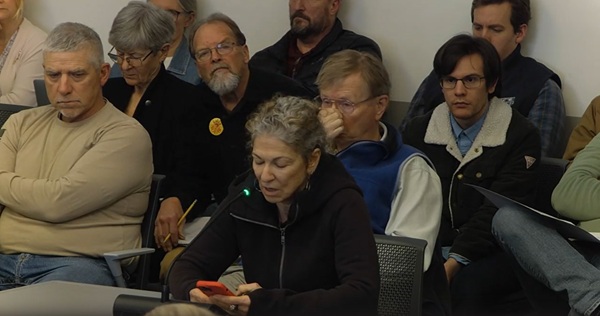
Presenter: After hearing public comments, EWEB commissioners will spend the next month spinning up on the ‘Rights of Nature’ movement. Speaking on behalf of the Lane County watershed bill of rights on Feb. 3, Michelle Holman:
Michelle Holman: Michelle Holman. I’m one of the three chief petitioners for 20-373. We wrote this law because we want better protections for Nature. We want a new baseline based on the rights of the entire watershed. The ‘Rights of Nature’ movement has been gaining momentum since 1990.
Six hundred and fifty-one Rights of Nature initiatives have been passed in 58 countries, including more than 150 in the U.S., according to the Eco Jurisprudence Monitor.
EWEB is concerned primarily with the needs of ratepayers. We maintain that ratepayers and citizens enjoy many benefits including good health when the natural world is protected.
We believe current regulatory standards are too low, permitting for allowable amounts of pollution, to which we, the people, never consented.
EWEB commissioners tell us they’re in compliance with water testing standards. I believe you, but compliance levels are set by the state and feds, which are based on legislation relating to practices like pesticide spraying. Existing law doesn’t allow for challenging existing regulatory standards.
Measure 20-373 is an innovative way to raise standards for clean water. And if your projects are not harming the watersheds, you’ve nothing to fear.
This is not just about EWEB. This is also about the county. I live out in the Coast Range. From Oakridge to Florence, let the voters decide.
It’s messy to make new changes. It’s messy to change law. Yeah, we know that, but just because it’s legal doesn’t mean it’s right. It’s time for a change.
Dillon Thomson: Dillon Thomson. I’m here to speak about the watershed bill of rights measure.
I just want to say that EWEB’S opposition to the measure rests on the idea that existing water laws are sufficient. They’re not. History says otherwise. Every major watershed failure in Oregon occurred while the Clean Water Act and state regulations were in place. Those laws regulate how much harm is allowed.
This measure exists because that permitted harm accumulates and it degrades watersheds. This measure does not replace existing law. It strengthens it. The concern about vague language misunderstands a little bit, I think, how rights work. Fundamental rights are intentionally broad so they can respond to new threats.
The right to clean water is no different. Courts interpret broad rights every day. What this measure establishes is a clear priority. Watershed health is not subordinate to convenience or incremental damage.
EWEB is not the target of this measure. It is one of its natural beneficiaries. This constrains actors who externalize costs onto watersheds, not utilities like this one that already invest in protection for EWEB.
It strengthens your position when defending protective decisions against private or upstream pressures. And I think concerns about delay in process also need reframing in watershed management.
Delay is often responsible stewardship. Once aquifers are contaminated or stream flows collapse, there’s no fast fix. Precaution is not inefficiency. It is how water security is maintained. I also think the enforcement burden is overstated. Lane County already enforces environmental and public health standards.
There’s also a public trust issue. Opposing a watersheds bill of rights signals that EWEB’s operational flexibility outweighs ecological integrity. I think that reputational risk is far greater than speculative litigation. Um, I urge G Web to reconsider opposition and move toward a neutral or engaged position.
Thank you very much.
Rio Davidson: Hi, my name’s Rio Davidson. I wanted to talk about the measure here that we’re talking about tonight. I feel that your duty is source water protection and public health, especially for McKenzie’s Eugene primary drinking water source. I wanted to speak about aerial pesticide spraying.
Another industrial activity that occurs every spring and fall in parts of McKenzie watershed. Unfortunately, there’s drift and runoff that can carry chemicals into the waterways. I’m concerned especially about the amount of chemicals being used on our watershed. Each clear-cut on our watershed is sprayed over multiple years.
I’m also concerned about the latest research and the amount of forever chemicals that are being used in pesticides. The study on the safety of these chemicals is run by the chemical companies. I’ve done a lot of research and know for a fact that these chemicals are not safe for drinking water.
Oregon law allows spraying to be done far too close to water sources such as the McKenzie River. There been multiple accounts of drift from these aerial spraying operations documented in Oregon.
Triangle Lake area has been dealing with this issue from some some time. Gold Beach also had an incident a few years ago where an entire rural neighborhood was subject to drift from aerial spraying.
The idea that we’re applying these pesticides in our watersheds is alarming and unsafe. This measure will help the community to protect our watersheds from this direct harm.
The current system of Oregon law is written by the chemical companies to protect them and their profits is again, a way of subsidizing the chemical companies and socializing the high cost of the harm where it is left to EWEB and the ratepayers to try and clean the water that is being contaminated by the timber industry.
Only when this practice of aerial spraying has stopped, can we be certain of the safety of our drinking water? We all live downstream. Help protect our watershed for the children and families that depend on EWEB for clean water.
Commissioner John Brown: Victor Odlivak:
Victor Odlivak: Basically, we worked really hard to get that petition signed, the 20-373, to give Mother Nature rights and protect the watershed. And that needs to be done. All the people of Lane County need to vote on it. They’re all affected. There are all kinds of chemicals running into the McKenzie River, and we’ve got to clean it up.
We’ve got to protect it. If EWEB wants to do anything, they should be part of. Endorse it because your job is to protect the watershed, protect the water. You need to, if anything, endorse 20-373 and let all of Lane County vote on it to do the same. That’s all I have to say.
Andrea Stapleton: My name’s Andrea Stapleton and I am the operations manager for the Northwest Center for Alternatives to Pesticides or NCAP. And I’m calling in behalf of this organization.
For nearly 50 years, NCAP has worked to protect public health, clean water, and the Northwest ecosystems from pesticide harm. A supporter reached out to us with concerns regarding EWEB’s apparent move to oppose the Lane County watershed bill of rights through a process that appears rushed, and closed to public input.
EWEB’s core responsibility is protecting our drinking water and public health, especially the McKenzie River, Eugene’s primary drinking water source. And the risks here are not hypothetical. Aerial pesticide sprain and other industrial activities still occur in parts of the McKenzie watershed and chemical drift and runoff can enter our waterways.
So we are here to ask EWEB to please slow down before taking any position. Please delay your vote. Conduct due diligence, including outreach to the campaign and chief petitioners and hold a public process with time for public comment. Thank you for your time.
Drew Thomas: Hi, Drew Thomas here. Thank you for this chance to speak for the watershed, I’m really heartened to hear so many others speaking out. It’s a really special place here, and this Lane County watershed bill of rights has been a long time coming. This is an opportunity to to stop aerial spraying. Others have gone into the science behind that.
But I think that we all know that the water needs to be protected and that we do all live downstream.
And I think that this is a really unique opportunity for the citizens to speak out. And I would hate to see EWEB oppose Measure 20-373 without due diligence, without publicly sharing reasons why, what the concerns would be. Because, from what I can see, the public seems to be very into this.
So, my ask today is that you delay the vote, and spend more time considering the Lane County watershed bill of rights.
Rob Dickinson: Hello, my name is Rob Dickinson with Protect Lane County Watersheds and speaking in support of Measure 20-373.
I’m here tonight because we were disappointed to see EWEB considering a resolution opposing this measure. Since that’s where things stand, I’d like to briefly address those concerns and ask the board to slow down and take a more deliberative process before voting.
Measure 20-373 establishes the Lane County watershed bill of rights. At its core, it does three things. It recognizes the rights of our watershed to exist and flourish free of pollution. It recognizes residents’ rights to clean, drinking water, and it restricts corporate activities that would violate those rights.
This measure is aimed at serious industrial harms, particularly clear-cut logging and aerial pesticide spraying that threaten people, wildlife and water quality. Many people involved in this campaign have spent, have seen these impacts firsthand over many years. Ewe constructive watershed protection work has never been the target of this measure.
Much of the concern seems to stem from fear that ewe projects could face legal challenges, but legal action requires substantial evidence of real harm and experiencing. Environmental attorneys have told us it is highly unlikely that ewe would be affected absent such harm. Lawsuits are expensive, they’re risky for those bringing them, and courts already have tools in place to dismiss frivolous claims.
Organa organizations acting responsibly towards watersheds are on solid ground. Meanwhile, the harms this measure addresses are happening now, affecting community health, wildlife, and long-term watershed resilience.
Our biggest concern tonight is the process. This resolution is being considered without full community, without giving proponents a clear opportunity to respond to specific concerns.
We are working with experienced legal experts who would gladly address these concerns, but we haven’t had that opportunity and it doesn’t look like we will if the resolution is voted on tonight. So we respectfully ask you to delay the vote, share your concerns in detail publicly, and engage the community in a fuller discussion take before taking a position. Thank you.
Aerin Nelson: Hello, my name is Aerin Nelson. I’m a part of Protect Lane County’s Watersheds. I’m a passionate member of the community who cares about the environment.
As a young person, the climate crisis is deeply anxiety producing. I’m deeply troubled by it. With all that EWEB does for the environment and protecting the watersheds under current regulations, it still allows pollutants.
I match what everyone else has said. The spraying, the industrial activity to enter the watershed through runoff, is very concerning for generations. We need to start thinking about generations in the future, not just right now.
The Environmental Protection Agency estimates that it is on average 27 times more expensive to deal with a drinking water contamination problem than to implement strategies for protection.
Measure 20-373 gives back Nature its inherent rights and the community, the ability to protect these rights. I’m also deeply troubled by EWEB’s rush in this response, not doing due diligence.
And being a community-run owned company, but it seems like you’re making these decisions behind closed doors, that you’ve already made a decision to oppose this before this public forum, making a vote on it tonight.
I ask you to delay this vote this evening so you can engage the public in due process and. It seems there are other members at play here, potentially big business.
It seems there’s a running theme here, that there isn’t a lot of transparency going on, so I’d like to ask for transparency, to be able to outreach to everybody before taking an official stance to oppose this measure. Thank you.
Jere Rosemayer: My name’s Jere Rosemeyer. My wife and I have been EWEB ratepayers for almost 40 years, and 100% Greenpower participants for almost that time. And I am puzzled and disappointed that the board is considering opposing Measure 20-373.
As I understand it, EWEB’s founding principles were local accountability for local resources. That’s exactly the same guiding principles of Measure 20-373. At your last meeting, several of you stated that you felt the measure was too broad. Well, the measure certainly takes a different approach to humans interaction with the natural world than previous legislation and regulations.
As I’m sure you all understand today, we live in a different and more perilous time than when EWEB was chartered. It’s time when more and more people are aware that environmental overshoot is threatening not only water resources, but the variability of the natural world to exist and regenerate. Each of us here is speaking tonight on behalf of Measure 20-373.
20-373 represents thousands of EWEB ratepayers who signed the petition to get this measure on the ballot and who agree that something more needs to be done to protect our watersheds. So I would strongly urge you to go slower on your deliberations and your decisions to agree to this proposal.
Christina Shew: My name is Christina Shew and I live here in Lane County. I’m here tonight simply as someone who depends on clean water and cares about the future of our local environment.
When I saw that EWEB was planning to vote on a resolution opposing Measure 20-373, I was really surprised because many residents see this measure as part of a larger effort to protect the watersheds our communities rely on.
My concern isn’t just about the position EWEB might take, but about how quickly this decision seems to be moving. Many residents are only now learning about the resolution and supporters of the measure haven’t really had a chance to respond to the concerns being raised before a vote is being scheduled.
From what I understand, the measure is aimed at preventing large-scale industrial activities that damage watersheds—things like extensive clear-cutting and pesticide spraying that affect our water quality, wildlife, and long-term ecosystems. These impacts are already being felt in parts of our county.
I understand there are worries about unintended consequences for public agencies, but legal action still requires evidence of real harm and lawsuits are not something people bring about lightly. Courts already dismiss weak claims and organizations working responsibly to protect water resources should not suddenly become targets.
My request tonight is simple. Please slow this process down. Give the community time to understand the issues, share concerns, and allow all sides to respond before EWEB takes a formal position. Thank you so much for your time and for listening.
Eric Dziura: Hi, my name is Eric Dziura. I went to the website that has a copy of the watershed resolution, looking for information. I read the resolution. I’m not a lawyer by any means. I certainly support the goals of the resolution. I’ve been in support of protecting the environment and dealing appropriately with the effects of climate change and all of those sorts of things my entire life.
However, there’s not a lot of information about like the background for this— where it came from, who wrote it, and those sorts of things. And so, as some of the speakers have pointed out this evening, you need more time to explain it.
I certainly hope that will be the case. It’s going to be on the ballot. We’re going to vote on it. So I hope that there’s more information forthcoming about it because it stands right now, I agree that it’s too broad and would be very difficult to enforce.
Katie Geiser My name’s Katie Geiser and I’m with Protect Lane County Watersheds. Thank you EWEB for your many years of dedicated service and hard work, which cannot be overlooked. But what is being overlooked is the people’s desire for greater protection of our watersheds.
Today’s an opportunity for the board to support our community in this desire. These times require us all the look at the rules, regulations, and laws that guide us and evaluate how well they serve us. It’s time to free ourselves from laws and institutional structures which hold us captive to harmful outcomes.
We do not want to continue forward bearing the consequences of inadequate water protection. There are those in our community who have died or suffered grave injury to their health. Due to toxic exposure, we deserve better. Thousands of Lane County voters signed this petition, commissioners. Join your community and take the lead in this effort.
You have the ability to guide the next steps to troubleshoot and to ensure a positive outcome. It’s time for the commission to say ‘Yes to measure 20-373’ and be on the forefront of ensuring a higher quality of water for Lane County.
Short of giving support to this measure today, we ask that you slow down your process and give it more serious consideration. Thank you.
Lily Pearl Johnson My name is Lily Pearl Johnson. I read Commissioner Barofsky’s resolution in opposition to Measure 20-373, and I got the impression that he’s worried that EWEB might have to do some additional work in order to comply with the new law if it passes.
And to that, my response is: Any new rule is going to require time and effort more so than than current at the outset.
As a public utility, one of EWEB’s primary responsibilities is to be a protective steward of clean drinking water. For our community, water is life and we humans cannot make any more of it. Therefore, it behooves all of us, especially EWEB, to adopt very highest possible standards of care for our precious water sources.
In order to preserve public trust on this issue, EWEB needs to slow down and hold a true public process before they vote. That would include scheduling a dedicated public forum, taking written comments for a set period and delaying any vote on Measure 20-373 till this process is complete.
Ratepayers are watching and EWEB’s current approach reads as dismissive and non-transparent.
Measure 20-373 is designed to protect Lane County’s watersheds and ensure long-term access to clean drinking water, a goal that EWEB should be aligned with.
The risks are real. Aerial pesticide spraying and other industrial activities still occur in parts of the McKenzie watershed. Spray drift and runoff can carry chemicals into creeks and rivers, and then into the water that we drink every day.
Bernadette Bourassa: Bernadette Bourassa, thank you. I’ve been concerned about poisons in our environment since the late sixties when Terra Chemical was releasing toxins into the Missouri River, where it wound its way through my hometown of Sioux City, Iowa.
Today I’m supporting this measure, obviously, and we do need more time to talk to each other. So I’m trying to cram my thoughts into this short period of time. But even with your support, you know that corporate America, especially the timber industry, is going to spend big bucks on big billboards and convince people to vote against the measure. Even if the measure passes by some miracle, it’s going to be challenged immediately with appeals and everything.
And this kind of behavior where corporate rights are more respected than people’s rights really bothers me. Corporations have the right to make money and we can’t infringe on that.
So this could wind its way all the way up to the Supreme Court and still be thrown away, ’cause we don’t have the right to keep toxins out of our water—that’s the bottom line—or out of our environment. And that’s wrong.
So I think we’re living in an age where people with power like you, people here that can vote to support us or not, you need to have some courage and just believe that good things can happen and all of the rest of it is excuses.
We’re in an era of excuses. There’s always reasons not to—it’s too this or not enough that. And when is that going to change? How about now? Thanks.
Jim Neu: My name is Jim Neu. I listened to the January EWEB meeting online and was disappointed in the lack of public information regarding the watershed bill of rights.
Commissioners had conversation about what was to be included in the ballot measure, but the public was left trying to figure out what you were referring to is there was no attachment in the agenda explaining the issue or anything that was even an upcoming ballot measure. Disappointing.
The shareholders are, the customers need to be able to have a public comment and voice their concerns before decisions are made.
Let’s keep transparency part of the public utility process. Thank you.
Nick Squires My name is Nick, a Ph.D. candidate at UO, and I’m someone who takes seriously the words of your own bylaws. Those bylaws state that EWEB’s principle purpose is to benefit the citizens of Eugene. Not the institution. Not the organization, the citizens.
I’m here tonight because I think there’s a growing gap between what EWEB says it stands for and how this board perhaps, actually governs. EWEB has built a brand around environmental stewardship. You talk about the watershed protection and sustainability. You tout the McKenzie River Source Protection Program.
Your commissioners hold degrees in environmental studies. You have focuses in sustainability. Many of you run nonprofits, dedicated recycling, conservation, public good. On paper, this board looks like exactly the kind of leadership who would champion clean water protection.
And yet when Measure 20-373, the watershed bill of rights, comes before this community, a measure that we give citizens real enforceable tools to protect water that EWEB itself is supposed to be delivering.
This board may find reasons to resist it, so I have to ask, if your mission is to serve citizens, why would you oppose a measure that gives those citizens stronger tools to protect their own water? If EWEB is already doing its job, well, what exactly does EWEB have to fear from accountability?
I urge this board to make this decision regarding Measure 20-373 transparent, public, and diligent.
This is done through scheduled and documented public forums. The citizens spoke up in your own bylaws, deserve absolutely nothing less.
Presenter: Mark Robinowitz:
Mark Robinowitz: So I’m going to have a unique view.
Half a mile south of here, 20 years ago, I tried to use the Clean Water Act to prevent the West June Parkway, and when it went away in 2007, the Clean Water Act had nothing to do with its demise.
It was a much better law from 1966 called (Section) 4(f) of the Transportation Act, which actually prevented pollution as opposed to regulate it.
And I really wish I could support this ballot measure initiative. But there’s nothing specific in enabling a transfer of authority from DEQ and EPA to Lane County, which doesn’t even have a water pollution regulatory agency.
This is the fourth ballot measure for community rights in our area, and the other three were knocked out in court and we could instead change the law to prevent aerial spraying of herbicides / biocides. But that opportunity has been missed several times, and this unfortunately does not do it.
It does not even say who would enforce these things other than vague references to a judicial process. I’m not a big fan of judicial processes. I think our legal system is all screwed up in countless ways that we could spend years talking about, but overturning the Constitution of Oregon and the United States is beyond the purview of a ballot measure such as this.
Most importantly, to quote David Brower in his last appearance in Eugene in 2000: ‘At our best, we have slowed the rate things get worse.’ And that’s not good enough for our survival.
And if we’re really at the phase of mass extinction, we have to be careful in designing laws that are going to prevent this. Thank you.
Sue Pileggi Hi, I am Sue Pileggi. Water within the state from all sources of water supply belongs to the public. That’s Oregon law.
EWEB is chartered by the city of Eugene to serve the interests of its citizens. EWEB is owned by the people as stewards of the water for the people of Eugene and Springfield. Why are you opposing this measure?
The purpose of Measure 20-373 is to stop bad actors who pollute our rivers and watersheds that feed them because it is cheaper for them to do so rather than implement environmentally sound practices.
As was mentioned earlier, it’s 27 times more difficult to clean up water once it’s been polluted than it is to mitigate the pollution before it happens. The risk of water pollution is real and it’s happening now. What will be the cost and who will bear it if as degradation of our watersheds continues?
The status quo is not good enough. I urge you to stay neutral at the minimum regarding measure 20-373 and let the measure to protect our waters and the health and well-being of our community to go forward as intended.
It comes to mind that I live not too far away from here, a couple miles away, and there’s a potent public image right here, a mile from this building, and that’s the (J.H.) Baxter timber processing plant. And that tells us what happens when corporate interests, their bottom line is more important to them than the community around it.
There’s subdivisions right across Roosevelt and who’s bearing the cost for the cleanup and what are the public health impacts? Thank you very much.
Santiago Gause: My name is Santiago and I agree with Sue, voice my support for 20-373, ask that you delay the vote and allow some time for legitimate process. Thanks.
Katja Gause: My name’s Katja Kohler and I live in Cottage Grove and in 2015 we experienced aerial spray drift. And got very involved with trying to stop the practice and met a lot of other people in the process that also have been affected by the toxins from forestry sprayings.
And that led me down the path of trying to pass the initiative to ban aerial spraying. We collected 16,000 signatures, spoke with a lot of people over a period of two years and heard a lot of people from our county that want the sprain to stop. But unfortunately we weren’t able to put it on the ballot, because of legal reasons.
So we went about trying to protect our watersheds in this way. It concerns me that it seems like the chief petitioners of this bill have not been talked to at all by EWEB, and I would urge you to speak your concerns and ask them questions about it before voting on it.
I am wanting to read you a section too, of an op-ed that my husband and I and Bobbi Lindberg (who used to work for the DEQ) wrote about. We looked at USGS’s water studies of the McKenzie in 2012. And the report showed many pesticides that were found in the water, including 2,4D, atrazine, glyphosate, flumeteron, methin, imazapyr, and triclopyr. So these herbicides are getting in our drinking water.
Jenny Bohrman: Hi, my name is Jenny Bohrman and I’m a physician in Eugene, and I want to speak mostly to my health concerns about the pesticides in the water, ones that Katya just spoke about specifically.
We know that they’re neurotoxins, they increase the risk of Parkinson’s disease and other neurodegenerative diseases.
They increase the risk of infertility. Immediately they give respiratory distress, rashes, headaches. They have significant impacts, and I understand the concern that this bill might not be strong enough to stop aerial spraying, but I would advocate the slowing down of the process for real consideration and communication discussion opening up to the public.
I think that your choice on this bill will certainly impact other people’s decision, and so it really matters if you vote this down or if you don’t endorse this. And so I advocate either to be neutral. Or to delay the vote or to vote positively on this
Presenter: EWEB will take another month to discuss the Lane County watershed bill of rights, and the growing ‘Rights of Nature’ movement.