Commissioner Farr: Shakespeare shows Stalin was right
4 min read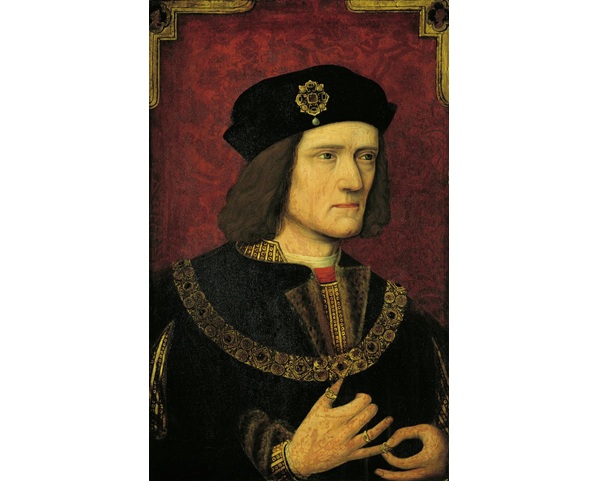
Presenter: Every county commissioners meeting includes time for commissioners business, allowing for announcements, comments, and remonstrances. On Feb. 10, Commissioner Pat Farr.
Commissioner Pat Farr: I want to talk about history a little bit. You know, we listen to history, we look at history, and we wonder if history is true. And Joseph Stalin said something. Stalin’s not one of my favorites, but he was pretty profound in some of the things that he said.
And he said that, ‘Heroes don’t make history, history makes heroes.’ And conversely, villains don’t make history, but history makes villains.
And the accuracy of history is something that we all should pay attention to. We’re at a point in time right now in our history where history is being changed, where what has been written down as history is being rewritten as something different.
And from this point in time, everybody who reads about it will read about the history that is created now—what was created at a point in time, not when it actually happened, but an interpretation that fits today’s language or today’s sentiment, so to speak.
I’m not going to say anything very specific about that, other than it’s really important, and if you look through time, it’s always happened. People have recreated history to match what they want to believe today, and make history match what they want to believe today.
A great example of this that I always cite is Richard III and Henry VII. You don’t care, do you? But you ask anybody, Richard III, good or bad? ‘Well, he’s bad.’ Well, why is he bad? Because Henry VII said he was bad. He won the war, and so he got to say Richard III was bad forever.
So consequently, history has Richard III as being bad from that moment in 1570 on, and that was exacerbated by the fact that William Shakespeare wrote the three plays about Henry VII—not one, but three about Henry VII.
One about Richard III, in which Henry the VII was a profound hero, Richard III was a villain. And Henry VII was the grandfather of Queen Elizabeth I, who William Shakespeare was writing for. So that was how history was formed.
So when we listen to history and people suggesting that history has been revised for a particular reason, it’s important to pay attention to that.
And it’s important to really drill down and find what really is the truth: Is it what this one person’s saying, or is it what another person is saying at this point in time?
So I think it’s really important that we bear that in mind as we look at history and as we—as villains, heroes, whatever anyone may be—remembering that it’s not what you do, it’s what people say about what you do, that people remember forever and ever.
And that is a really important consideration as we look to change history, or as we look to vilify those who may have changed history, or as we look to correct history that has been changed for one reason or another.
Now along those lines, I found a cartoon that was published in the late 1990s.
And it showed Jim Torrey, the mayor of Eugene, punting a ball, Sid Leiken, the mayor of Springfield, catching that ball, and on that ball it said ‘PeaceHealth.’
That point in history determined why no children born in this metropolitan area are born in Eugene. They’re all born in Springfield because all of our hospitals are in Springfield.
Go back to that point in time when history was being made, and look at the vote on the Eugene City Council at that point in time, which was a 7-1 vote to rezone the Crescent area from what it was zoned, Hospital, into what it is now, R2 and C1.
It was a push by the Eugene City Council at the time to try to get PeaceHealth to locate downtown Eugene, where the Eugene hospital and clinic kind of used to be. You might recognize where Eugene Toy & Hobby is today, that general area—the city council wanted PeaceHealth to go there.
So we on a 7-1 vote, I’ll not tell you who the one—yeah, I will. I was the one that said that, ‘No, they’ll go to Springfield instead.’ And they did.
So we’re making history. We’re providing history and let’s make sure that if we are quoting history, try to get it correct.
Presenter: Commissioner Pat Farr says the great Elizabethan propagandist William Shakespeare demonstrates the truth of an observation by Joseph Stalin: Heroes don’t make history, history makes heroes.
Image of Richard III courtesy British School, Public domain, via Wikimedia Commons.