Riverview: Our crisis response program ends April 30
12 min read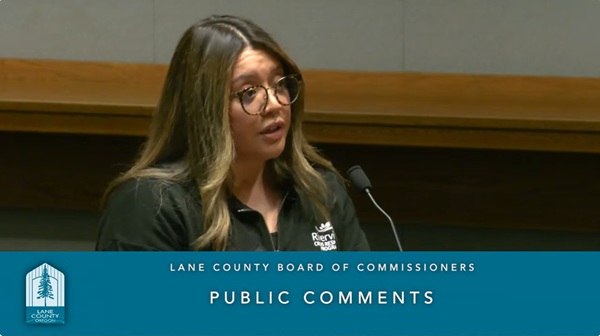
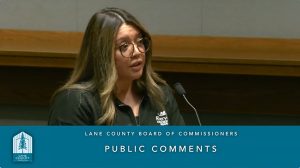
Speaker: After nearly three decades of service, Riverview prepares to say goodbye to its crisis response service. At the Lane County Board of Commissioners March 31, Blake Zolezzi:
Blake Zolezzi: My name is Blake Zolezzi. I want to start by saying thank you to Commissioner (David) Loveall. He was doing some community work yesterday that led to a serendipitous interaction. And then subsequently the beautiful team that I work with is here on behalf of Riverview crisis response.
I see all of these plaques in front of me here, and I believe that all of you are very concerned and caring about this community. And our crisis response is communitywide. It’s been around almost three decades and it will be ending at the end of April. So a little less than a month now. And when we were talking to Commissioner Lovell yesterday, it didn’t seem like he was too aware of that. And so we wanted to bring awareness to all of you here.
It’s pretty sad to see because our program has not only been for crisis response—personally, I do mobile response as well as dispatch for answering the phone. It’s 24/7/365. We have day teams and evening teams, but what we also had was an intensive stabilization unit that would come in and get referrals from the emergency department or our crisis response.
And so a lot of the barriers of service in this community and in this country are wait times, right, are lists, and trying to get services and a lot of the families really need that.
Our program, due to the funding source, was able to come in and provide wrap services for these families pretty immediately. Sometimes we would have crisis responses on the weekend. We’d come in and meet on a Monday, and by Tuesday we would have behavior supports, therapist and peer supports, which you’re going to hear from all of these. That’s beautiful.
And the only way we could do that is through a funding source, like a grant or private funding sources, which is not something that I can speak on. The county, in my understanding, has decided to not renew that contract, that that grant contract that allowed us to operate through Riverview.
I’m not going to speak on any reasons as to why or how, but what I will speak to is our community should be proud of the service that this program has provided and as a template for how mental health services for youth should be provided on a national level. And it’s been incredibly grassroots. It has been incredibly impactful, and it is incredibly disheartening to see it come to an end.
And even in the gracious perspective, to see the county pick that up and have to create something new. And we had something that was so useful and so valuable. I know my team here will speak further on that.
But as a lifelong resident of Lane County, I want you all to be aware of what’s happening. Thank you.
Tiffany Long: My name is Tiffany Long. I’m here to talk about a program that has been a part of this community for over two and a half decades, and one that has personally changed my life.
What makes my perspective unique about this program is that I have been on both sides of the door.
Years ago, this crisis team responded to my own home during some very difficult times. They brought support, de-escalation, and a sense of stability when it was needed the most. They showed up without judgment. They helped my family navigate moments that felt very overwhelming.
And for the past five years, I’ve had the privilege to be on the other side of the door, serving the families in our community in some of their very hardest days.
Just last night, I sat with a young man who was struggling deeply with school, with friendships, with family relationships. He had the courage to call our crisis line all on his own. He reached out for help in a moment, and I was able to help validate his big feelings, help him regulate, and work with him to create a plan to be safe for the rest of the evening.
This family currently has no ongoing services, and without programs like ours, they will be left to navigate this process alone. But with proper support, we could connect them with intensive intervention services, with therapy, with behavioral support, with family support until we could get them into longer-term care.
That kind of support is life-changing for our youth. This work is not only valuable, it is essential, and it keeps people safe. It strengthens families. It reduces the strain on our emergency services, and it meets people where they are in the moment that they very much need it. I love this work. I have seen firsthand the difference it makes not just to provide, not just as a provider, but as someone who has once needed the same help.
I respectfully urge you to speak with the county about signing an MOU to ensure that there is no lapse in these services. We could continue to give even a short gap would mean that someone in crisis would have nowhere to turn. The crisis work matters. It saves lives. It builds hope, and it reminds people that they are not alone.
And if someone in this county reaches out for services on May 1, the question will be very simple: Will there be someone to answer the phone, and will they respond? Thank you for your time today.
Laura: Hi, my name is Laura and I’m a crisis response worker at Riverview Center for Growth here in Lane County.
Every day I work with youth and families who are navigating some of the hardest moments of their lives. A lot of the time, these families are already doing everything they can with very limited resources. And even with the supports that do exist, it can still feel like there’s not enough.
So the idea of losing another resource is honestly heartbreaking, because I’ve been in those homes. I’ve sat with those parents who feel overwhelmed and don’t know what to do next. I’ve been with kids who are hurting, dysregulated, and just need someone to understand what they’re going through.
And something I’ve learned in this work is that crisis doesn’t always look the same. Sometimes it’s loud, sometimes it’s quiet, sometimes it’s a family at the breaking point, even if it doesn’t meet a definition on paper.
But for the people living it, it’s real and all we can do is show up for them—not to define their experience, but to support them through it. Because in those moments, sometimes the most powerful thing we can offer isn’t anything complicated. It’s presence. It’s being another human in the room who can slow things down, who can listen without judgment, who can help everyone take a breath.
I’ve watched situations shift just because someone showed up with care instead of escalation. I’ve seen families go from feeling completely alone to feeling supported, even just for that moment. And that moment matters because for a lot of families we serve, that moment can be the difference between things getting worse or starting to stabilize.
This work matters because these people matter, and the need in our community is real and it’s growing. If anything, now is the time we should be showing up more, not less. Now is the time we should be standing beside our community. Now is the time we need to meet people where they are and remind them they’re not alone.
My hope is that we can continue to find a way to keep showing up for these families, and I support the request for Lane County to sign the MOU to continue this work, because the need isn’t going anywhere. Because when people are in crisis, they don’t need fewer doors to turn to. They need someone to show up.
Presenter: Julie Williamson:
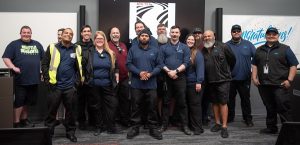
Julie Williamson (Riverview crisis response program director): Thank you for hearing us. I’m the director of the Riverview crisis response program, and this is the very devoted team or some of them—we have about 25 people. Over the last year, our team has responded to 2,659 calls from families; 54% of those calls were deescalated just over the phone with caring individuals, 46% required a mobile crisis team to go out.
The impact on the community is that this reduced 911 calls and law enforcement involvement, meaning that, you know, our local police and rural police have to spend less time going out to homes to manage children’s behavior and can actually do the job that they’re assigned to do.
We have reduced the emergency department visits for these children, where they used to be housed for weeks in the emergency department, waiting for some sort of services. We’ve increased family stability. There are families who have lost their jobs, faced eviction, had, you know, criminal charges against them for the the outbursts and the behaviors of their children.
Lane County has decided after two and a half decades that they do not want to renew this contract, citing budget cuts. However, the calls that we go on, they will only cover about 27% of those calls, and the other 70% will go unanswered because they don’t meet their criteria for crisis. That’s a lot of children out there and a lot of families who will call the Lane County Crisis Line and will get turned away.
We have spent the last six months asking the county to renegotiate with us. We’ve offered to do it with a smaller budget. We’ve offered to compromise, to work in partnership with them, and they have simply been unwilling to do that. All have.
We have asked them now, at the recommendation of the Oregon Health Authority, is that they sign an MOU just giving us permission to continue to operate on those calls that they won’t respond to. It will cost the county nothing. It’s literally just permission for us to continue doing what we’re already doing.
So I guess we urge you: We cover all of Lane County, every city, every rural area. Our teams go far and wide all hours of the day and night. They work their day jobs and they choose to do this in the evening to help the community.
Losing this service is going to be a great loss to the community and is going to put a lot of strain back on law enforcement and emergency departments. So this is work that is very valuable and meaningful to us. And next you’ll hear from a couple families who have received our services and they can speak to how it’s impacted them.
Meghan Murphy: Hello, I’m Meghan Murphy. I am a foster parent. Now we’re called resource parents.
I’ve been doing this for 12 years. And over the past four years I’ve been working with kids in hotels. And we do temp lodging prevention because we don’t want kids in that environment. It’s much better to be in a home. The kids that end up in hotels are usually off the streets. They have poor mental health and just a lot of addictions and behaviors that make it hard for them to go into a more typical foster home.
I’ve lost—two of the teens in my care have passed away over the past couple of years, which is so sad.
In June, I got a call saying, ‘I’ve got these teens. They’re siblings. They want to be together. We heard you have two open rooms.’ I said, ‘Okay, I want to meet them first.’
We met and along with them was Riverview staff. They had behavior support people there. We worked it out, we said, ‘Okay, we’ll do a trial.’
Got the kids in there. The Riverview—the difference in these with these two kids was the Riverview team. I didn’t know anything about Riverview, but the way that they worked with these kids, they had a behavior support team. They had a crisis team. They had therapists.
The therapy. My kids wouldn’t go to therapy. The therapist said, ‘All right, we’ll come to you.’ Just everything about this team, we met weekly. They helped us with finding jobs for for one of the teens with school enrollment, with purchasing clothes, with just so many things. And that’s the difference with these two and the success I’ve seen.
So now Riverview is sort of, you know, trying to figure out what’s happening, well, my kids are falling apart. The boy’s not going to school. The girl doesn’t have her job anymore. And really, it’s just we haven’t had what we were having because I guess they’re just trying to figure it all out. Their BSSes—their behavior support specialists—have left, one of their therapists have left.
And I see the difference. And I really, it’s sad because what we got from Riverview as a team to support—I can’t do it alone. These kids have addiction. They have all kinds of big behaviors. They have nothing else.
And so Riverview would come in, I’d say, ‘Ah, this is happening.’ They’re like, ‘Are you saying it’s a crisis?’ ‘Yes, it’s a crisis.’ ‘We’ll be right there.’
And that has now, it’s what, almost April. And they’ve been with me this long. They’ve been home every single night, met their curfew and I really attribute it to the team. And so it’s just been such a huge difference and I really hope that it can continue. Thank you.
Presenter: Melanie Campbell:
Melanie Campbell: You heard what this team does. You heard their beautiful and eloquent descriptions of what they do.
But I want to ask you: Have you ever believed you would die at the hands of your child? I have, and I use that word ‘believe’ because it was not a maybe. It was going to happen without them.
I’m sorry for my emotional state, but this is huge to us. If you pull the 911 calls from our house, you’ll hear the terror in our voices, the knowledge that without the police, we were in serious peril from our son. This was a multiple call per week, sometimes more than once a day call for help.
Three calls into our monthlong crisis, a police officer gave us Riverview’s phone number. My husband had to call less than an hour after the police left our home, and Riverview came, and then later that day, they came again. That’s when I met a sassy angel named Tiffany. She has the ability to bring the tension in a room down notches instantly.
She asked about Blake’s care and identified a lack of services I didn’t even know we lacked. I didn’t know what was out there. Everybody tells you a different story, asks you to fill out different applications and meanwhile you sink. You constantly sink. Tiffany taught me to stop asking the wrong questions. Get the right applications, even working on submissions with me.
She brought a team behaviorist in, helped him start seeing himself as a real person again. Gave him his humanity back.
Some days we called Riverview more than once a day. They came in person, talked Blake down on the phone. No matter when we needed them, they were there in a real and impactful way. We have not had to call 911 recently. Our last call was in January and it wasn’t once a week. It was one phone call. That’s led to two months of no calls. That means we have help and we’re not a drain on our community in the same way.
What Riverview crisis team does—what they really did for us—they walked in like highly-trained, experienced warriors in team shirts and no fear. They guided us to a lasting solution. Our son has a DSP (direct support professional). He’s doing well. He’s even gotten to take a trip with his DSP.
With certainty, I would not be standing here today without the skillful intervention of these people. How many other families need this group?
Their very unique program should not be dismantled. There is no way disabled kids win in this scenario. Their families do not win. Not in a world without Riverview.
Please make a choice to save lives. This is not me being melodramatic. This is not an emotional sentiment, even though you hear my voice. This is a cold, hard fact: Taking their funding away was the stupidest decision any politician ever did. Please reconsider.
Presenter: Commissioners hear the value of Riverview’s crisis response as it prepares to shut down at the end of April.