Meet the candidate: Charlie Conrad for HD12
11 min read
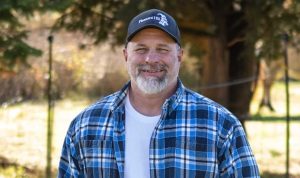
Presenter: ‘Meet The Candidate’ welcomes Charlie Conrad for House District 12. Please tell us about yourself and why you’re running.
Charlie Conrad: I’m Charlie Conrad and I’m running for House District 12, to regain the seat. And I’m running because there’s some things that I was not able to accomplish after my term ended. I still stayed involved in public policy, still stayed involved in the community, and engagement, served on a number of different boards.
I give a lot of public presentations, continue advocating for civic engagement because I think it’s important that people are able to vote and that they’ve got a say and that their vote matters.
But the other part of it is, I want to help educate people on the process so that other than just looking at whether it’s an ‘R’ or ‘D’ after somebody’s name, maybe they’ve got a little bit more information to do, a little bit deeper analysis, figure out: ‘Okay, which one of these folks is actually going to be the best representative for me in my views? And what do I want?’
And as long as you vote, vote. But if I can do something to help you parse through who to vote for, then that’s what I advocate for and that’s what I want. And that’s part of that civic engagement side.
And so with that, you can tell that a lot of what I focus on is people. And what I want to continue doing and to advocate for is people. My slogan is ‘People Over Politics.’
I also believe that, and in my first term, that’s the way that I represented and that’s the way I did the job, and I’m very proud of the reputation that I have, and I’m very proud of that reputation transferring to all the support that I have in the community to back me and to help me run as a minor party candidate.
You know, minor party candidates, we have a difficult time with fundraising, difficult time to get our messaging out there. But because of all that support I’ve got, we’re able to make some ground and we’re able to do a lot of things. We’ve got a lot of momentum.
And so very optimistic right now about winning the write-in nomination in May, and then having a very competitive November.
As you can imagine, most minor party candidates aren’t competitive in a general election. I fully anticipate that it’ll be a very competitive election and voters in House District 12 will certainly have a choice between the incumbent Republican and his record, or somebody like me, who’s a minor party candidate supported also by the Democratic Party here in Lane County that puts people first.
And that’s one of the priorities that I’ve got. It is focusing on the things that impact us all on that daily basis at the state level, right? It’s our housing, it’s our education system, it’s our breaking health care system. It’s all of those things that impact us.
And as I look back at our political system both nationally and at the state level, as soon as a topic becomes partisan, the solutions become farther and farther away from actually ever happening, being enacted, and being arrived at.
We need people, as I see it, that are willing to put people first, put parties second, and come sit at that table and figure out, ‘How are we going to do this right?’ It’s compromise, collaboration, cooperation. Those are the things. That’s the art of negotiation, that’s the art of public policy.
And politics is bringing people together and figuring out how folks with some different interests or some different policy positions, how are we actually going to resolve this, and then move on to that next challenge, right?
Because as long as we keep talking about challenges, we’re not solving anything. And all the challenges are going to keep building up and manifesting, and the order of magnitude’s going to be that much greater.
Let’s actually solve something and let’s solve something to the benefit of the people in the community so that we can give them some security, a little bit of opportunity, some economic predictability and stability, things that matter to people, and that’s really what I want to be able to focus on, and that’s why I stay engaged in the community.
It is about talking to folks. It is about being there. It is about being present. It’s about hearing their voices, working with them on the solutions that will impact them and matter to them.
Presenter: What is the biggest issue facing House District 12 and how would you address it?
Charlie Conrad: Broadly, it’s going to be the economic conditions that we’re all facing, and it’s going to be working along with all of our cities, to work on the infrastructure side of things.
How are we going to add infrastructure that we need? How are we going to fix the infrastructure that’s been in the ground for 40 years, that’s now breaking, and then how are we going to transition that into housing?
Because that’s the kind of the core of a lot of what we’re dealing with is, ‘How do we increase our housing stock, our housing supply, and to make that more affordable?’ And that means the governor’s numbers that she put out there, I think, what, three years ago now? We’re not coming close. We’re about half, every year.
And so those numbers, just keep getting further and further away from where we need to be. For this district in particular, that housing side also relates to the emergency management. So Eastern Lane County, you know, eight different cities including Eugene: Cottage Grove, Creswell, Westfir, Oakridge.
So cities of various sizes, various geographic locations, and different challenges. Westfir’s challenges are going to be so different than Eugene’s challenges, right? $100,000 to get a fire station into Westfir, really isn’t going to be that much of an issue to come up with $100,000 in Eugene, even though they’re having budget problems. Westfir, that’s going to be five or six years worth of budget savings and nickel-and-diming to be able to get something like that.
So, you know, the challenges that I want to work with is how can the state support our local communities? I am a strong supporter and advocate for home rule authority and that’s why I engage with communities and city councils so much is because I see part of the state’s role not to mandate, ‘you shall.’
It’s ‘How can I help you?’ Right? How can I help get some of that taxpayer-funded money back to you for that infrastructure? And that’s one of the things I was proud of in the first term, is by working with the communities and understanding what their needs are and helping ’em through navigate the legislative process that we were able to bring in $10 million back to the community.
Three million for Cottage Grove, $1 million for Creswell, $1 million for Junction City, $300,000 for Lowell. Lowell’s never had money from the state before, $300,000 to help them out. And then $5 million for Willamette Family Treatment. So $10 million coming back to this area of taxpayer money, simply because I engaged and I listened and I knew what they wanted.
You know, if you let the cities and these local communities set their priorities and go, ‘This is what we need,’ that helps me out because then I can go to the legislature and go to everybody I need to and get the votes right, because the legislature’s all about compromise.
You may have heard the numbers. It’s 31, 16 and one, you have to have 31 votes on the floor in the House, 16 in the Senate, and the governor has to sign it, right? As one representative, I can’t go mandate anything. I’ve got to have 30 friends to do it.
And if I know that my community of Cottage Grove needs this so that they can build homes, that’s an easy sell for me to go to my colleagues and go, ‘Help me. Help me help Cottage Grove build some homes and alleviate that housing crisis that they are facing. How do we do this for our rural communities?’
How do we look for small communities with smaller budgets where, again, like Westfir, $50,000 or $100,000, that’s years and years and years of savings. How do we help them with that fire station?
Let them figure out how to get the volunteers in there. We’ll help with that where we can, we’ll help work with all the other fire districts, ’cause it’s very collegial. The fire districts all help each other. As a state, let’s help them get that fire station in there. Right?
That’s what we need to do, and that’s what I want to continue doing because then that’s going to help people. It’s going to be volunteer jobs, it’s going to be jobs, it’s going to be safety and security. It’s going to be all those things that impact people on a daily basis, and it’s just going to be chipping away at that.
So I use that kind of as a broad thing, but it is all integrated and there’s not one single thing that we can do or one single thing that I can do other than to be that voice, to be that the person that’s listening and to be that one that’s willing to be engaged in both the community and the legislature to be that bridge, and to help advocate and ensure that people have their voices heard, and that they’re considered when the solutions are being considered.
Presenter: How do you differ from your opponents?
Charlie Conrad: So as an independent, as a minor party candidate, we have a closed primary system in Oregon. So I will not be on anybody’s ballot, right? So registered Democrats only see the registered Democrats. Registered Republicans only see registered Republicans. So I need registered Democrats to write me in. Registered Republicans can write me in. I will be on the November ballot.
And where I differ from the Republican incumbent, he was recruited to run against me by Oregon Right to Life because I support people’s rights to make decisions with their health care provider.
That should not be a decision politicians make for you. It shouldn’t be a decision strangers make for you. It should be a decision that you make with your providers and those that you seek counsel from, based off your values, your circumstances, and your beliefs. That should be you. It shouldn’t be somebody else.
And so, because I held those beliefs, because I went against the Republican Party, I got primaried and he was recruited specifically to run against me. Had I made a different decision, then most likely I’d be about to enter my third term in an uncontested primary and not really worried about getting back into Salem.
But because I stood by my principles, because I stood by what Oregonians have decided in survey after survey is that that’s what they want, I paid the political price.
But I’m not done. I’m not going to give up, because I think it is something that really matters to people, and it matters to folks that there are people like myself, politicians, who actually want to put them first and want to advocate for them and ensure that they can be heard.
And that’s a significant difference is that people come first for me (the party, no).
Presenter: Is there anything else you would like to add? Charlie Conrad:
Charlie Conrad: Appreciate that, so the website is ConradForOregon.com. ConradForOregon.com. Reach out, let me know. If you want to meet, let me know if you want to volunteer.
This last weekend, we had a great organized canvassing event in Eugene. We had 15 volunteers. Mayor (Kaarin) Knudson came and spoke. Rep. Nancy Nathanson, Sen. Floyd Prozanski, they all came and spoke.
We went and knocked on doors for a couple hours and as a group we knocked on about 750 doors, which represents about 1,100 voters. A lot of positive feedback. A lot of the folks in Eugene don’t know that that part of the district (so that part of the district is basically Albertsons and 30th on back southeast up the hills), don’t know that that’s part of a Republican district.
And in Oregon, registered Democrats do not win Republican districts. So even if Amber Smith, the Democrat that filed and only filed, she’s not going to— there’s no voter pamphlet statement or anything for her. Even if she was running a campaign, she would never win.
You know, the last Democrat nominee, Michelle Emmons, when she ran twice, she loses about by 15 points. And that’s about what’s going to happen. This district, it’s 40% Independent (like me) and NAV (non-affiliated voter), unaffiliated. And we’re more right of center, right? We’re focused on the economy, we’re focused on the practical side of things.
And then it’s 33% Republican, 27% Democrat. A Democrat’s not going to win. The only way in this district that we can unseat a Republican is if I have the full force and support of the Democrats behind me.
Even though we’re not going to always agree on the policy side of things, I’m here for them, I’m here to represent them. And I understand that when I go to Salem, that they’re in my head and that they know that somebody’s thinking about them, somebody’s thinking, ‘How’s this going to impact Eugene?’ ‘How’s this going to impact all the Democrats that live in the rural areas?’
A number of my friends are registered Democrats and they live out with me where I do in Dexter or they live out in Marcola or wherever—somebody’s thinking about them going, okay, how are they going to be impacted? What is the best decision of this bill for them?
So, if you want to volunteer, if you want to knock on doors, if you want to phone bank, obviously minor party candidates, that’s a shameless plug, please donate. There’s a $50 tax incentive per person, $100 per married couple filing jointly. Any help and support is always appreciated, and if you want to just give me a call and have a conversation, let’s have a conversation. Happy to do that.
Presenter: ‘Meet the Candidate’ visits with Charlie Conrad, who is running for House District 12 as the candidate of the Independent Party of Oregon. You can write him in on your major party ballot.