New political party promotes one of Teddy Roosevelt’s favorite ideas
16 min read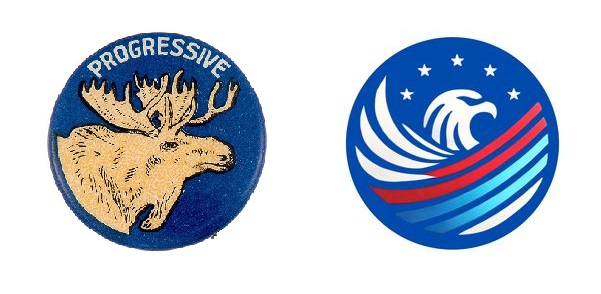
Presenter: The new political party ‘We the People’ wants us to revisit some ideas that were once very popular. Alan Cohen from WTP Lane County is here today to discuss some reforms with us. Alan, can you give us an example and explain why we should be revisiting this idea today?
[00:00:16] Alan Cohen (We The People): Yes. One idea is allowing the people to recall Supreme Court decisions by plebiscite. For example, revisiting Citizens United v Federal Election Commission. To clarify, our party only seeks to raise options.
We want to elect representatives who will pursue the reduction of inequality. They may or may not focus on the (Supreme) Court or use this particular approach. Our role is to bring forward ideas worth considering.
[00:00:48] Presenter: Such as an idea from the Progressive Era that would let voters recall a Supreme Court decision. Alan, you said that was a key issue in the presidential election of 1912.
[00:00:58] Alan Cohen (We The People): In 1912, Theodore Roosevelt ran for a third term, largely because he opposed judicial supremacy, the idea that the Court alone decides which laws the people may make. Roosevelt argued that the Court made the Constitution a means of thwarting instead of securing the absolute right of the people to rule themselves.
[00:01:22] After his loss, the belief that the Court has the final say in interpreting the Constitution became entrenched. But given today’s rulings that corporations are people and money is speech, it may be time to revisit the issue.
[00:01:37] Presenter: Where did Theodore Roosevelt see a threat?
[00:01:39] Alan Cohen (We The People): Roosevelt warned that the concentrated judicial or financial power could undermine democracy. He cited Lochner v New York (1905), which struck down a law limiting bakers’ working hours.
TR felt he was following Lincoln’s tradition, the Lincoln who had said: ‘Capital is only the fruit of labor, and could never have existed if labor had not first existed. Labor is the superior of capital and deserves much the higher consideration and if the policy of the government upon vital questions affecting the whole people is to be irrevocably fixed by decisions of the Supreme Court, the people will have ceased to be their own rulers.’
Both leaders believed government should protect working families and preserve Republican life against threats like monopoly or undue influence.
[00:02:40] Presenter: Teddy Roosevelt’s ‘Bull Moose Party’ did not win. What happened as a result?
[00:02:44] Alan Cohen (We The People): Debate shifted from whether the court should be accountable to which party could appoint the friendliest judges. Reacting to the Warren Court whose decisions they did not like, corporations, by pressing Republicans for conservative nominees, began to change the court.
[00:03:05] Nixon’s four appointees shaped the Court beginning a conservative dominance that remains in force, as Adam Cohen (no relation to me) argues in Supreme Inequality. Over the last 50 years, the Court has been supportive of the rich and hostile to the poor, and that bias has only grown over the 50 years. That change has been so pervasive that it is fair to say that the Supreme Court has become, over the past 50 years, an enemy of the people.
[00:03:38] Presenter: That’s a provocative thesis. Can you share some of the details of the author’s argument?
[00:03:43] Alan Cohen (We The People): Adam Cohen details the bias case by case. For our purposes, campaign finance is the most telling arena. After Watergate, Congress passed reforms limiting contributions and establishing public financing, reflecting strong public support. But in Buckley v. Valeo (1976), the Court struck down limits on independent expenditures, calling them speech.
[00:04:12] This opened the floodgates to money and politics 34 years before Citizens United undermining Congress’s effort to reflect public will. The court later extended this logic in First National Bank of Boston v. Bellotti, and most notoriously Citizens United (2010), which held that corporations are people with free speech rights.
Justice Stevens dissented, pointing out corporations have no consciences or beliefs and are not part of the ‘We the people’ protected by the Constitution.
[00:04:47] A poll showed roughly 80% of Americans across parties oppose the ruling, but the Court prevailed. Meanwhile, the Court restricted the speech rights of ordinary citizens upholding bans on leaflets and mailboxes, and signs on utility poles. As Adam Cohen notes, this revealed two standards: deference to the wealthy and suppression of the poor.
[00:05:14] Presenter: But aren’t there remedies outlined in the Constitution?
[00:05:16] Alan Cohen (We The People): In practice? Not really. Congress rarely revisits decisions after court decisions. An impeachment is pretty much politically impossible. Only one justice has ever been impeached. That was in 1804 and he was acquitted. Even FDR, frustrated by obstruction of the New Deal, tried to expand the court rather than pursue impeachment.
[00:05:40] Our existing remedies are impractical and ineffective.
[00:05:45] Presenter: So, one idea you’d like to bring back is allowing the people to recall Supreme Court justices.
[00:05:50] Alan Cohen (We The People): I think that’s a reasonable option. Recall by national plebiscite would be a stronger deterrent than impeachment. Recalls already exist at local and state levels. Gov. Gray Davis of California was removed from office in 2003 using recall. Expanding that option could restore accountability.
[00:06:12] Presenter: Would this be implemented as a Constitutional amendment? Is there a draft circulating?
[00:06:17] Alan Cohen (We The People): To my knowledge, no model amendment exists. Our goal is simply to reopen discussion. Let’s stick to Citizens United as our example. Vacating it outright would not be enough. Since earlier rulings like Buckley still enable money in politics, an effective recall initiative would address the salient Court arguments and define the replacement rules in this case, denying that money is speech or corporations or people and reasserting public financing as consistent with the founders’ vision—perhaps reviving 1974 FECA limits until Congress could update them.
[00:07:01] To qualify for the ballot, perhaps five or 10 million signatures would be needed. Experts would draft the replacement text, ensuring both principle and practical implications were clear. A national vote in November elections would then be the deciding factor, and probably the best way of approaching this.
[00:07:21] Presenter: That decision would indeed be of, the people, by, the people, and for, the people.
[00:07:26] Alan Cohen (We The People): Exactly. It’s time to explore mechanisms that restore popular sovereignty and ensure the court does not remain unaccountable to those it was meant to serve. There are more commonly discussed alternatives: an increase in the number of justices; direct election of justices; and term limits. Of course, each approach has its benefits and disadvantages. We just want to keep our options open.
[00:07:52] Presenter: Thank you very much, Alan Cohen.
[00:07:54] Alan Cohen (We The People): Thank you.
[00:07:55] Presenter: That’s Alan Cohen introducing the new political party ‘We The People,’ which qualified for the ballot in Oregon. You can learn more and get involved through their Lane County website, WTPLane.org.
The transcript below reflects the full-length interview.
Presenter: I understand that the We the People Party believes that, as a country, we should reconsider some once-widely-favored policies which have since disappeared from public discussion. Alan Cohen is here today to discuss this idea with us. Alan, can you give us an example of such an issue and tell us why you would like to see it implemented?
Alan Cohen: Yes, thank you. One such issue is the recall of Supreme Court decisions by plebiscite, a vote of the people: for example, a revision of the Court’s decision in Citizens United v. Federal Election Commission.
One clarification, though, before we proceed. We the People Party intends only to propose specific changes like this one as options. Our plan is to elect representatives of by and for the people who will decide which changes to make to achieve our primary goal—the reduction of inequality. Those representatives may choose not to address the Supreme Court at all or to address it in an entirely different way. Other parties might decide to implement the ideas we bring to attention. Our intent is to generate reconsideration of worthy, potentially useful ideas that relate to our goal.
Presenter: Such as the idea from the Progressive Era that would let voters recall a Supreme Court decision, Alan, you said that was a key issue in the presidential election of 1912.
Alan Cohen: Yes, in 1912, Theodore Roosevelt (TR) decided to run for a third term as President in large part because he was trouble by judicial supremacy, the idea that the Supreme Court, by declaring a law unconstitutional could effectively decide which laws the people were entitled to make and which not, using whatever arbitrary interpretation a majority of its judges might choose.
Logan Stagg Istre, a self-avowed conservative, who wrote an article about this issue, quotes Roosevelt as saying that the Court had made the “Constitution a means of thwarting instead of securing the absolute right of the people to rule themselves.” After TR lost the election (to Woodrow Wilson in a three-way race in which William Howard Taft and Wilson both supported judicial supremacy) it has become generally accepted that the Court has the final say in interpreting the Constitution. However, now that we are living with the absurd Supreme Court arguments that corporations are people and that money is speech, it may be time to revisit judicial supremacy.
Presenter: Can you tell us a little more about TR’s ideas and concerns?
Alan Cohen: Istre says that Roosevelt’s concern was for America’s soul, and he care little for the exact form its economy took so long as it worked for honest Americans…. He understood… that a dangerously stratified economy produced an unstable and vulgar national life characterized by the twin evils of destitution and decadence…[and] he believed national life should reflect the higher values of most Americans, and that no power, whether it be judicial or financial, should be able to frustrate that mission…. For Roosevelt, the power to decide constitutional questions through the political process was central to the American system of government…. Questions as to what the government could or could not do—from purchasing land to establishing a national bank, erecting a protective tariff, or enacting moral legislation—were answered at the ballot box and in congressional debate at the local, state, and federal level.
TR was particularly concerned about decisions like Lochner v. New York (1905), where the Court found a law establishing maximum work hours for bakers to be unconstitutional. He saw himself as a follower of a tradition that dated back to Lincoln, who said in his first State of the Union address “Capital is only the fruit of labor, and could never have existed if labor had not first existed. Labor is the superior of capital, and deserves much the higher consideration.”
Both of them “defended the protection of American labor from unfair foreign competition, and both viewed strong, well-paid, growing families as essential to republican life.” Finally they both “believed that a strong, united nation could use popular government to promote a manly, harmonious public life free from threats of moral or economic degradation, whether it be slave power, monopoly, or undue foreign influence.” In fact Lincoln, thinking of the Dred Scott decision maintained that “if the policy of the Government upon vital questions affecting the whole people is to be irrevocably fixed by decisions of the Supreme Court . . . the people will have ceased to be their own rulers.”
Presenter: Teddy Roosevelt’s ‘Bull Moose Party’ did not win in 1912. What happened as a result?
Alan Cohen: Debate switched from whether the Court was accountable to the people or not to a partisan battle over who could appoint the most sympathetic judges, and it has remained so ever since.
But what each side has learned to its cost is that any right that the Court can invent, it can also reverse and take away. The next big change was that the corporations began to get serious about Supreme Court justices in response to many of the Warren Court decisions; and they began to lobby the Republican National Committee and Republican political leaders for conservative justices beginning during the Johnson Administration.
They had good timing because President Nixon got to nominate four justices between 1969 and 1973, and those nominees created a new “conservative” balance of power that has not only continued but has increased to this day.
Adam Cohen (not a relation) who served as a member of The New York Times editorial board and as a senior writer for Time magazine, points out in Supreme Inequality: The Supreme Court’s Fifty-Year Battle for a More Unjust America, the new Burger Court was, from the start, supportive of the rich and hostile to the poor and that bias has only grown over the years. That change has been so pervasive that it is fair to say that the Supreme Court has become over the past 50 years an enemy of the people.
Presenter: That’s a provocative thesis. Can you share some of the details of the author’s argument?
Alan Cohen: Adam Cohen makes the arguments that support this opinion, court case by court case, in his book. He shows in separate chapters how, in regard to education, democracy, working life, and criminal justice, the Court has expanded the rights of corporations and the rich and diminished the rights of the average citizen.
There is not room here to make such a detailed argument; but for our purposes, it should be sufficient to discuss another issue he addresses, campaign finance, with a focus on Citizens United.
In 1974, to address public outrage generated by the Watergate scandal, Congress passed campaign finance reform legislation. A Gallup poll in September 1973 had found that 65% of respondents favored public financing of federal campaigns and a total ban on private contributions.
Congress therefore enacted amendments to the Federal Election Campaign Act (FECA) of 1971 that “established a $1,000 limit on contributions to candidates in federal elections; a separate $1,000 limit on independent expenditures ‘relative to a clearly identified candidate’” to address advertising or other promotions that could be seen as supporting a specific candidate; they increased requirements for disclosure; and they “established a Federal Election Commission to enforce the limits, oversee the disclosure, and manage the public financing system.”
(It is interesting to note how responsive Congress was back then to public opinion in contrast to Congress’ unresponsiveness today.)
James Buckley led a group that filed suit on the day the new law took effect, challenging the law and claiming that contributing to campaigns and spending money on elections were forms of speech and so protected under the first amendment. The case, Buckley v. Valeo went first to the D.C. Circuit Court of Appeals which upheld nearly the entire amended FECA. It also indicated that the government had an interest in safeguarding “the integrity of elections” and in “avoiding the undue influence of wealth” on democracy.
The court said, “It would be strange indeed if…the wealthy few could claim a constitutional guarantee to a stronger political voice than the unwealthy [merely] because they are able to give and spend more money, and because the
amounts they give and spend cannot be limited.”
However, the Supreme Court disagreed and reversed the D.C. Circuit decision, insisting that spending money on elections is speech. It did accept the limit on contributions to candidates’ campaigns because that, it said, was a way of associating with a candidate rather than speech; but it struck down the limit on independent expenditures which it held were pure speech. That meant that as long as they didn’t give the money directly to the candidate or the candidate’s campaign, they could spend as much money as they wished to get that candidate elected.
The Court said the government’s only legitimate interest was in limiting corruption or the appearance of corruption and apparently felt that spending millions to get a candidate elected would not never even appear to be a bribe to vote as the funder wished. Though it did not rule on corporations, it was Buckley v. Valeo that first flooded campaigns with the money of the rich; prevented Congress from implementing the people’s will; and undermined the public financing of elections thirty-four years before Citizens United.
As Cohen observes, “The First Amendment, many constitutional law scholars say, was enacted not merely to prevent government from limiting speech but, more broadly, to promote democratic values, including fair and inclusive political debate…. The Buckley Court’s interpretation of the First Amendment made it inevitable that the wealthy would have an outsized, and perhaps controlling, role in elections and in setting government policy…. ‘If the trend of money in politics that it started continued,’ [J. Skelly] Wright [one of the judges in the majority in the D.C Court decision] warned, ‘the principle of one person, one vote could become nothing more than a pious fraud.’”
In this case, is not the Supreme Court an enemy of the people?
But the Supreme Court wasn’t done. Two years later in First National Bank of Boston v. Bellotti, it invalidated a Massachusetts law prohibiting independent funding of state referenda, again frustrating an attempt to make elections fairer, and for the first time saying that “The inherent worth” of speech to inform the public does not depend on “the identity of its source, whether corporation…or individual.”
Of course, the final nail in the coffin of equality in the election of representatives was Citizens United, which introduced the further idea that corporations are people. But that didn’t come until there was a more conservative majority.
Before that happened, however, the Court indicated that it had two different standards when it came to the rich and the poor. In 1981, the Court decided that a Civic Association could not leave unstamped messages in private mailboxes used by the Postal Service; that though the homeowners buy their own mailboxes, once they are designated as places where U.S. mail is left, no one else can use them.
Then a few years later the Court accepted a Los Angeles law banning candidates from posting campaign signs on utility poles and other public property. As Adam Cohen points out: When the wealthy and powerful wanted to use their money to influence elections, the Court swept aside an elaborate campaign finance regime that had been enacted by Congress and signed by the president, responding to strong popular demand to help a nation heal after a scandal that went all the way to the White House. When poor and middle-class people challenged bans on their ability to hand out leaflets or post campaign signs, the Court suppressed their speech out of deference to Postal Service mailbox rules and municipal concerns about clutter.
It is hard to avoid the conclusion that the Court had two very different First Amendment standards for political speech, one for the wealthy and powerful and another for the “little people.” Citizens United allowed unlimited amounts of corporate money to be spent on elections, arguing that under the First Amendment corporations have the same rights as people. But as Justice Stevens wrote in dissent, corporations have “no consciences, no beliefs, no feelings, no thoughts, no desires…[and] “are not themselves members of the ‘We the People’ by whom and for whom our Constitution was established.”
Soon after the decision, in a Washington Post-ABC News poll, eight of 10 participants opposed the decision, 85% of Democrats, 81% of independents and 76% of Republicans.
Presenter: You make a good argument. Certainly, as far as campaign finance is concerned, the Supreme Court does seem to have functioned as an enemy of the people. But aren’t there already remedies for a Supreme Court out of step with the people’s will? Congress can adjust the laws, and impeach justices.
Alan Cohen: That Congress did not pass new legislation back then suggests the difficulty of trying to guess what the Court will consider acceptable. Moreover, with the present day in mind, when Congress does not respond to the people’s concerns, that is not even a potential remedy.
As to impeachment, that happened only once in the court’s history. In 1804, the U.S. House of Representatives voted to impeach Associate Justice Samuel Chase. Then in 1805 Chase was acquitted by the Senate and served on the court until his death in 1811. Even when the Court was obstructing the New Deal, Franklin Roosevelt didn’t try to impeach the refractory judges, he proposed increasing the number of justices (allowing him of course to nominate the new ones). That’s because impeachment is so very politically fraught. A House committee conducts an initial investigation, present its findings to the whole and the full House votes. If the House decides to impeach, the Senate than conducts a trial with the Supreme Court Chief Justice presiding as judge. The Senate then votes—removal from office requires a two-thirds majority.
For these reasons, in addition to the consideration of a recall of decisions, a recall of individual justices by national plebiscite might also be a reasonable policy option. That would be a more effective deterrent to ignoring the public’s wishes than existing options. “At least 108 recalls went to the ballot in 2024, with 77 resulting in removal and 31 officials surviving the vote.”
Three-quarters of recalls occur at the school board or city council level, but Gov. Gray Davis of California was removed from office in 2003 by recall and Scott Davis of Wisconsin had a serious scare in 2012. (Only 19 states allow recall of state officials.)
Presenter: I’m really interested in the mechanics. If a vote of the people throws out a legal decision, would we just drop back to the old precedents? How would it qualify for the ballot — would there be different deadlines in each state? Would it always be on the ballot in November, or would it vary by state? Would this be implemented as a Constitutional amendment? And if so, is there a draft already circulating?
Alan Cohen: I’m pretty sure there is no model amendment—as I said to begin with, I chose to talk about this issue because it has dropped out of public consideration.
Let’s stick with Citizens United and consider how that might be approached. I don’t think there would be much point in throwing out a decision. Decisions often rest on technicalities or build on precedents. If Citizens United were simply vacated, the prior decisions would still present obstacles to “getting money out of politics.”
And so, the proposal would have to contain the replacement approach. What we would need to vote on would be both the principles at issue and their specific implications. That would require judges and/or lawyers who disagree with the decision to review and develop the text of the proposal. To qualify for the ballot might require, for example, five or ten million signatures (or an online equivalent) nationwide.
Regarding Citizens United, we might end up with a proposal that denies both that corporations are people and that money is speech (so that such doctrines would not be used again), and that says instead that public financing would be closer to the original intent of the founders and the Constitution they wrote.
We might also suggest a return to the amended 1974 FECA rules while advising Congress of the wish to have it revisit, revise, and update those rules within a year or two. Of course that’s just my off the cuff conception; the people implementing the process would write the rules and the proposal. It does seem to me that a November ballot
would probably be best.